
Annona longiflora
Annona longiflora S. Watson
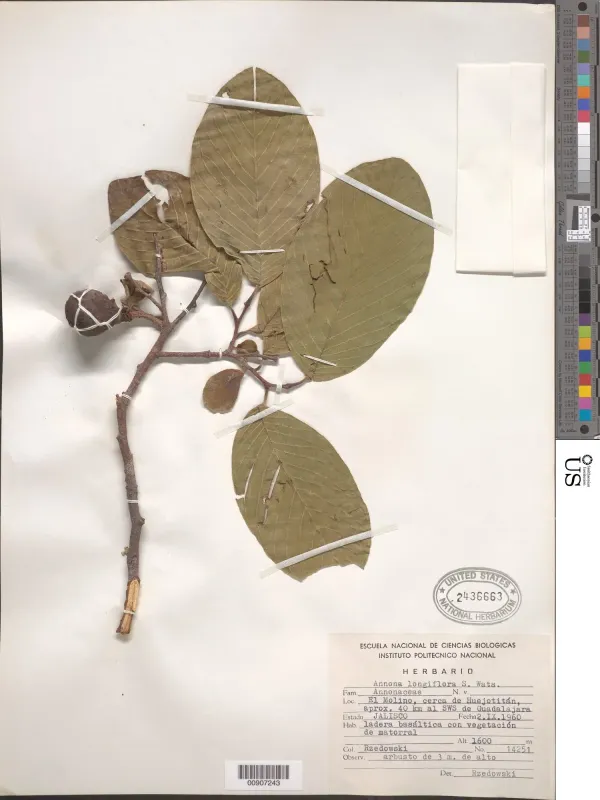
Description
Growing requirements
Annona longiflora is a member of the Annonaceae family. This species originates from Mexico, primarily inhabiting tropical deciduous forests where it has adapted to seasonal rainfall patterns.
The plant thrives in warm tropical climates and is highly sensitive to frost. Successful cultivation requires full sun exposure and protection from cold winds, which can damage tender leaves and inhibit overall growth rates.
Well-drained, sandy loam soils are ideal for this species. While it exhibits tolerance to drier conditions once established, adequate irrigation is crucial during the flowering and fruit-setting stages to ensure high-quality production.
Agronomic management involves periodic pruning to maintain an open canopy structure, which facilitates light penetration and airflow. Proper spacing between trees is essential to prevent overcrowding and to promote healthy development.
The tree is primarily utilized for its edible fruits, which contribute to local diets. Due to its unique botanical features, it also holds value in botanical collections and sustainable agroforestry projects within its native range.
Main diseases and pests
Typical pests affecting Annona longiflora include mealybugs and various scale insects that thrive in humid environments. Integrated pest management strategies, such as introducing beneficial insects, are recommended for control.
Root rot, caused by poor soil drainage or over-irrigation, is a significant threat to tree health. Ensuring that the planting site has excellent drainage is the most effective preventative measure against such diseases.