
Atemoya
Annona x atemoya Mabb.
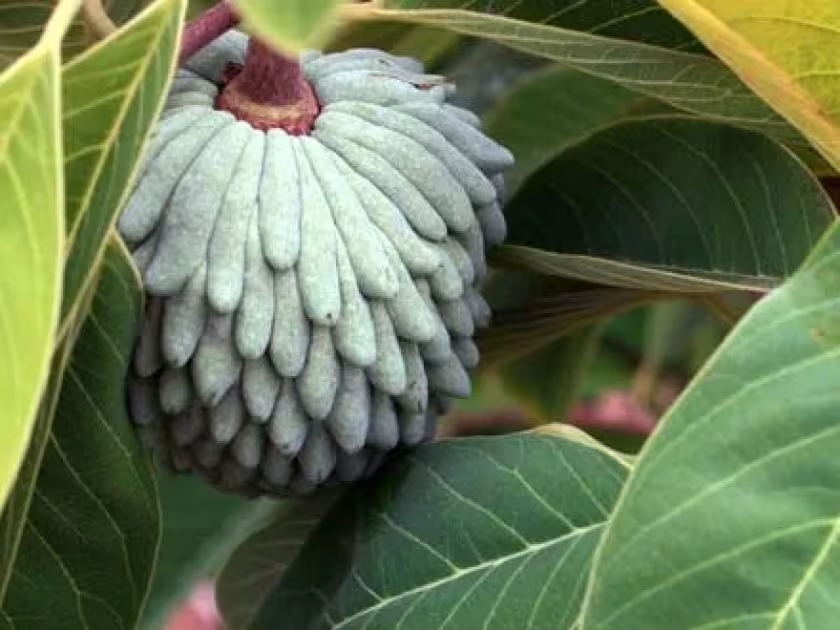
Description
Sowing dates
Atemoya (Annona x atemoya) is a hybrid of the cherimoya (A. cherimola) and the sugar apple (A. squamosa), belonging to the Annonaceae family. In commercial cultivation, this crop is propagated exclusively through vegetative methods, primarily by grafting scions onto seedlings of Annona species.
Seed propagation is strongly discouraged for commercial production because it does not maintain the genetic integrity of the hybrid and leads to highly variable fruit quality. The best results are obtained when grafting is performed during periods of active sap flow.
Rootstocks are typically prepared from seedlings aged 6 to 12 months in a nursery environment. Planting the saplings into their permanent location is usually timed with the onset of the rainy season to ensure optimal moisture levels for root establishment.
To successfully establish an orchard, one must choose sites with deep, fertile soil and excellent drainage. Given the hybrid nature of the crop, it is essential to plant compatible varieties together to facilitate cross-pollination, which significantly improves fruit set.
The root system is highly sensitive to waterlogging, so planting on raised mounds is recommended for soils with poor drainage. Proper spacing, ranging from 4 to 6 meters, is vital for long-term health and maintenance of the trees.
Growing requirements
Atemoya thrives in tropical and subtropical climates and is sensitive to extreme cold. The ideal temperature range for both vegetative growth and fruit development is between +20°C and +30°C.
The crop requires consistent moisture throughout the growing season. While the trees show some moderate drought tolerance, sustained water deficit results in reduced fruit size and poor quality, often causing premature fruit drop.
Soils should be rich in organic matter with a pH level between 6.0 and 7.5. The tree performs poorly in waterlogged conditions, making effective site selection and drainage management the primary requirements for a successful harvest.
Atemoya is photophilous; however, young saplings often require partial shading to protect them from intense solar radiation during the first years of growth. Wind protection is also necessary to prevent scarring of the delicate fruit skin and branch damage.
Structural pruning is essential for developing a strong framework and managing tree height. This practice also simplifies the process of manual pollination, which is often necessary in areas where natural insect pollinators are absent.
Yield
Yield efficiency is heavily dependent on the quality of pollination. In many regions, natural pollinators are insufficient, making hand pollination a mandatory practice to ensure consistent fruit set and uniform fruit shape.
The first harvest typically occurs 3 to 4 years after planting in the permanent orchard. As the tree matures, productivity increases, with peak yields expected when the trees are between 7 and 10 years old.
Because fruits form on current-season wood, appropriate pruning is the key tool for yield management. In intensive orchards, a well-maintained tree can produce between 50 and 80 kilograms of fruit per season.
Marketable quality is determined by the timing of the harvest. Growers look for specific color changes, from dark green to a lighter yellowish-green, and a slight expansion of the segments on the fruit skin.
Post-harvest handling must be done with extreme care due to the thin, easily damaged skin of the fruit. High-quality atemoya is a premium product, highly valued for its custard-like texture and complex, sweet-tart flavor profile.
Main diseases and pests
The most common pests affecting atemoya plantations include mealybugs and scale insects. These pests feed on tender shoots and fruit surfaces, often leading to the development of sooty mold, which degrades the plant’s ability to photosynthesize.
Fruit flies represent a major quarantine threat, capable of causing significant crop loss. Integrated pest management, including traps, exclusion netting, and targeted biological controls, is essential to protect the harvest.
Fungal diseases, such as anthracnose and various types of root rot, are the most frequent causes of tree decline. These issues are almost always linked to poor drainage or excessive soil moisture.
- Consistent monitoring for insect population spikes.
- Sanitary pruning to remove dead or diseased limbs.
- Use of mulch to regulate soil moisture and temperature.
- Application of approved fungicides during high-humidity cycles.
- Prompt removal of fallen fruit to minimize pest breeding sites.
Effective defense requires a combination of good horticultural practices and cautious application of pest control agents. Early detection of symptoms is the best strategy to maintain long-term orchard health.
Harvesting
Harvesting is a manual process that requires precision to avoid bruising the delicate fruit. Because the fruits do not ripen simultaneously, multiple picking rounds are usually required over several weeks.
Maturity is judged by the color change and the development of a characteristic fragrance. Once picked, the fruits require a brief ripening period at room temperature until the flesh reaches its ideal, creamy consistency.
The shelf life of ripe atemoya is quite short, typically 3 to 5 days. For long-distance shipping, fruits are kept in cold storage at +10°C to +12°C to slow the ripening process.
It is crucial to avoid temperatures below this range, as chilling injury can cause the skin to turn brown and damage the internal flavor. Properly handled atemoya is a highly sought-after exotic delicacy.
After the harvest, trees require specific nutrient replenishment to regain energy for the next growth cycle. A balanced fertilization program supports the development of future floral buds and overall tree longevity.