
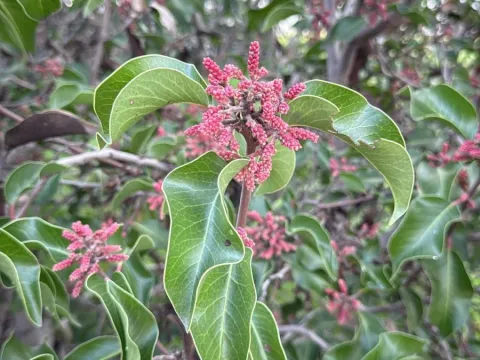
Sugar bush
Rhus ovata
Sugar bush (Rhus ovata) belongs to the Anacardiaceae family. It is an evergreen shrub characterized by its robust nature and ability to thrive in harsh, water-limited environments.
What the section contains
Sugar bush
Native to southwestern North America, specifically California and parts of Mexico, this plant is a key component of the chaparral ecosystem. Its biological architecture is designed to minimize water loss, featuring leathery, waxy, egg-shaped leaves.
For cultivation, the plant requires excellent drainage. It is best suited for sandy, rocky, or loamy soils. Providing a well-aerated soil structure is crucial, as the root system is highly prone to rot in saturated conditions.
Sunlight exposure is essential for the healthy development of Rhus ovata. It performs best in full sun, where it can develop a dense, structural form. While it can tolerate partial shade, its growth rate and flowering density are reduced.
The climate requirements emphasize the need for a Mediterranean-style pattern: warm, dry summers and cool, moist winters. It is highly drought-tolerant once established and does not require frequent irrigation.
Root rot is the most significant threat to Sugar bush, typically caused by improper watering techniques. Over-watering, especially in soil with poor drainage, can be lethal for this drought-adapted species.
Pests like scale insects may occasionally infest the foliage, particularly if the plant is stressed by environmental factors. Regular monitoring helps in identifying and treating infestations early.
Rodents, such as rabbits, are known to chew the bark of young plants. Protecting the base of the stems with physical barriers or mesh is recommended during the establishment phase.
Fungal diseases affecting the leaves can occur if there is poor air circulation around the canopy. Pruning to maintain an open structure is an effective management practice to promote overall plant health.
Overall, Rhus ovata is considered highly resilient to typical landscape stressors, provided that the gardener respects its natural preference for arid conditions and excellent drainage.