
Sumac
Rhus coriaria
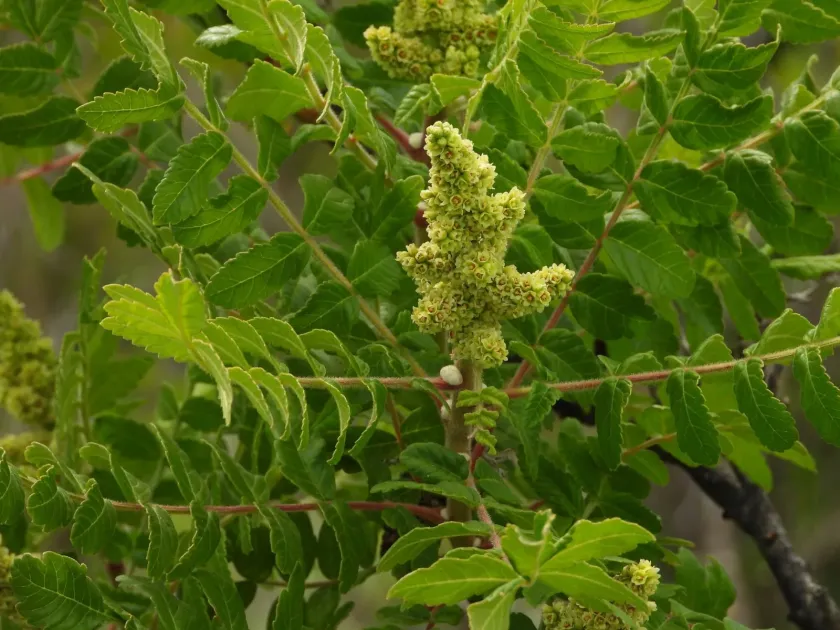
Description
Sowing dates
Sumac is typically propagated through seeds or vegetative methods, such as root cuttings or root suckers. Due to the hard seed coat, seeds often require scarification or stratification before planting to achieve successful germination.
Sowing in nurseries is generally scheduled for early spring when soil temperatures consistently reach 12–15 degrees Celsius. Maintaining consistent soil moisture during the initial weeks is critical for the establishment of young seedlings.
Vegetative propagation via root suckers is preferred for ensuring consistent plant characteristics. These are carefully separated from the parent plant during dormancy, typically in late autumn or early spring.
Planting density is determined by the intended use and growth habits. Providing adequate spacing, usually 2 to 3 meters between rows, ensures proper airflow and simplifies mechanical maintenance operations.
Early-stage care is vital, as newly planted saplings can struggle against invasive weeds. Regular weeding and mulching can promote faster root development in the first two years of the plantation's life.
Growing requirements
Rhus coriaria is a member of the Anacardiaceae family and is recognized for its exceptional resilience as a xerophytic plant. It thrives in arid environments where many other agricultural crops would fail.
The crop prefers well-draining, light-textured soils, including rocky or calcareous types. It is highly intolerant of waterlogged conditions, which can lead to rapid root rot and overall plant decline.
As a sun-loving species, sumac requires full sun exposure to maximize the production of tannins in its leaves and flavor compounds in its fruits. Excessive shade significantly reduces both crop yield and quality.
Climate-wise, it is best suited for subtropical and Mediterranean conditions. It exhibits strong tolerance to heat and dry winds, making it an ideal candidate for cultivation in regions with hot, dry summers.
Once fully established, the plant requires minimal input, as it is naturally adapted to survive on degraded or nutritionally poor soils, making it an excellent choice for erosion control projects.
Yield
Sumac is primarily cultivated for its leaves, which are rich in tannins used in the leather industry, and its fruits, which are processed into a popular culinary spice. Economic yield peaks as the plants reach maturity, typically after 5–7 years.
Leaf harvesting is timed when tannin content is at its highest, usually during the summer months. Proper drying of the leaves is crucial to maintaining the quality of the raw material for industrial applications.
Fruit harvesting is performed in late autumn upon reaching maturity. High-quality yield depends on harvesting during dry weather to prevent moisture-related spoilage during subsequent storage.
The economic efficiency of sumac cultivation is bolstered by the plant's long lifespan, providing a stable source of income for many years with minimal annual maintenance costs compared to annual crops.
The growing market demand for natural tanning agents and organic spices ensures a steady market for the product, solidifying its place in sustainable agricultural systems.
Main diseases and pests
Sumac exhibits a high degree of natural resistance to many common agricultural pathogens. Its chemical composition, particularly the presence of tannins, acts as a natural deterrent against various pests and diseases.
Occasional threats may include soil-dwelling larvae that feed on roots, particularly in younger plants. Early monitoring and soil management are usually sufficient to mitigate these localized risks.
Leaf spot infections may occur under conditions of prolonged high humidity or poor ventilation within the shrub canopy. Maintaining proper plant spacing is the most effective preventative measure.
Chemical intervention is rarely required for sumac, making it an excellent crop for organic farming systems. Its biological robustness allows for an ecological approach to pest management.
By ensuring that the plantation environment is well-managed and avoiding conditions that favor moisture buildup, growers can avoid almost all common threats to the crop.
Harvesting
Harvesting leaves is conducted in mid-to-late summer by hand or with specialized tools. Once harvested, leaves are spread out in shaded, well-ventilated areas to dry thoroughly without direct sun exposure.
Fruits are harvested in autumn, once they reach their characteristic deep red color. The clusters are clipped from the plant, handled gently to avoid crushing, and transported in breathable containers.
After collection, fruits undergo a drying and cleaning process to remove debris. Careful temperature control during the drying phase is essential to preserve the tart flavor profile of the spice.
Logistics require breathable packaging to prevent heating and fungal growth during the transport of raw materials from the field to the processing facility.
Long-term storage must take place in dry, cool conditions with controlled humidity levels to prevent the product from losing its potency, aroma, and commercial value.