
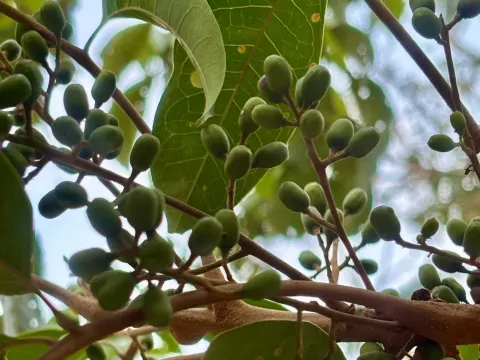
Tapirira
Tapirira
Tapirira is a genus of evergreen trees belonging to the Anacardiaceae family. Native to tropical regions of the Americas, these trees are characteristic of rainforest habitats where environmental conditions remain stable throughout the year.
What the section contains


Tapirira
The cultivation of Tapirira requires a tropical climate with high temperatures and significant atmospheric humidity. The plants are highly sensitive to low temperatures and require protected zones if introduced to regions with temperate climate fluctuations.
Soil preferences involve well-draining, nutrient-rich substrates. Waterlogging is detrimental to the root health of Tapirira species, making the choice of sloped or high-porosity land essential for successful establishment of the crop.
Botanical traits include the development of a sturdy trunk and a broad canopy. Depending on the species, the growth rate can be moderate, necessitating adequate spacing between individual trees to ensure sufficient access to light and nutrient resources.
Agricultural management is focused on weed control during the sapling stage to minimize competition. Proper pruning may also be applied to manage tree structure, particularly if the objective is the long-term production of high-quality timber.
The primary commercial interest in Tapirira lies in its wood, which is utilized for construction and furniture manufacturing. Harvesting is typically conducted upon reaching the required diameter for industrial timber usage.
In addition to timber, some Tapirira species produce fruits that are harvested for local consumption. The harvesting process for fruit involves manual collection once the drupes reach maturity to ensure the best quality and flavor profile.