
Tahitian sumac
Rhus taitensis
Description
Growing requirements
Tahitian sumac (Rhus taitensis) is a perennial tree species belonging to the Anacardiaceae family. It is natively distributed across the tropical regions of Southeast Asia, the Philippines, Indonesia, and the islands of the Pacific Ocean, where it thrives in warm, humid conditions throughout the year.
This species is highly adaptable to various tropical soil types but prefers well-drained, nutrient-rich substrates that allow for deep root penetration. It is frequently found in primary and secondary forests, where it utilizes high solar radiation to support its dense foliage and rapid biomass accumulation.
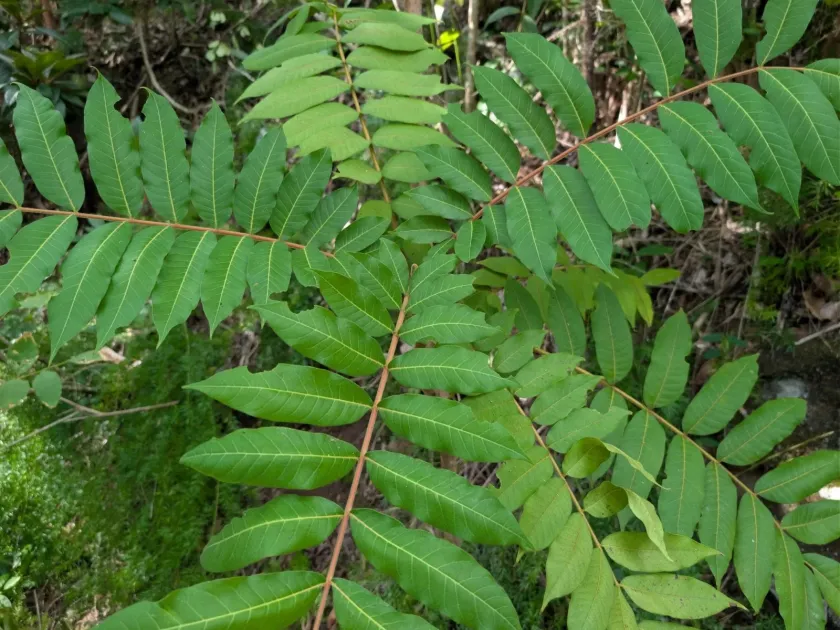
Botanically, Rhus taitensis is characterized by pinnate leaves and terminal panicle inflorescences. The tree can reach significant heights, providing structure to the canopy. Its resilience in its native habitat makes it a robust choice for reforestation efforts and landscape restoration projects in compatible tropical climates.
Agrotechnical requirements focus on the avoidance of waterlogging, which is a major limiting factor for this species. During the establishment phase, young trees require consistent moisture and protection from intense competition by invasive weeds. Once mature, the tree exhibits moderate drought tolerance.
Economically, the tree is valued for its wood, which possesses suitable mechanical properties for local construction and traditional woodworking. Its aesthetic value has also led to its adoption in urban landscaping and tropical garden designs, where it serves as a shade-providing element in park environments.
Main diseases and pests
The primary phytosanitary threats to Rhus taitensis involve fungal pathogens that affect the foliage under conditions of excessive humidity. Leaf spot diseases are common, often requiring improved air circulation within the tree canopy to prevent the spread of spores and subsequent tissue necrosis.
Insect pests, particularly scale insects and borers, can inflict damage on the trunk and vascular system of the tree. Effective integrated pest management involves monitoring for early signs of infestation and ensuring the tree remains free from nutrient stress, which helps bolster its natural defense mechanisms against biological attacks.