
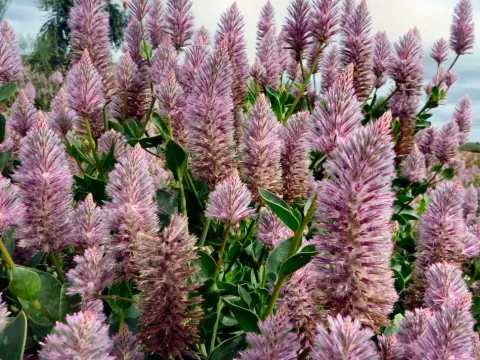
Ptilotus carinatus
Ptilotus carinatus
Ptilotus carinatus belongs to the Amaranthaceae family and is recognized for its unique, ornamental flower spikes. Cultivation begins with sowing seeds in controlled environments, typically during late winter or early spring to ensure uniform germination.
What the section contains
Ptilotus carinatus
Successful germination requires a constant temperature between 22 and 25 degrees Celsius. The seeds are small and light-sensitive, so they should be surface-sown or covered only with a very thin layer of vermiculite to ensure they receive sufficient light.
The growing medium must be highly porous and well-drained. Peat-based mixes with high perlite content are commonly used to prevent moisture retention near the delicate root systems of the young seedlings.
Transplanting is performed carefully once the seedlings reach the two-leaf stage. Care must be taken to minimize root disturbance, as the plant does not respond well to stress during the early stages of development.
Final placement in permanent beds or large containers should only occur when temperatures consistently remain above 15 degrees Celsius. Ptilotus is highly sensitive to cold, which can lead to immediate growth arrest or plant death.
Originating from the arid Australian environment, this species is exceptionally well-adapted to intense sunlight and high heat. It is a heliophyte and requires a site with at least 8–10 hours of direct sunlight per day to maintain its compact habit.
Soil structure is of primary importance. Sandy or gritty soils with excellent drainage are mandatory. The plant struggles significantly in heavy or clay-heavy soils, which trap moisture and promote root pathogens.
Water management is the most critical aspect of Ptilotus agronomy. The plant should be treated similarly to succulents; deep, infrequent watering is preferable to light, frequent sprinkling to encourage deep root penetration.
Fertilization should be kept to a minimum. Over-fertilizing, especially with high-nitrogen formulations, will result in lush, floppy foliage and a significant reduction in the quantity and quality of flower production.
The plants require low ambient humidity. Adequate spacing and ventilation are necessary to prevent stagnant air pockets, which contribute to the development of foliar and soil-borne diseases.
Root rot, primarily caused by Phytophthora or Pythium species, is the most common threat. These pathogens thrive in waterlogged soil, emphasizing the need for strictly controlled irrigation and high-quality drainage systems.
Aphids are frequent pests that infest the dense flower spikes. They can cause physical damage and act as vectors for various plant viruses, which can lead to stunted growth and discolored foliage.
Spider mites can also be problematic in dry, hot conditions, especially in greenhouse environments with poor air circulation. They feed on plant fluids, resulting in chlorotic spots and weakened overall vitality.
To mitigate pest impact, integrated pest management (IPM) practices should be employed, prioritizing the use of horticultural oils and soaps before resorting to broader-spectrum chemical applications.
Hygiene in the growing area is crucial. Removing spent blooms and debris prevents the buildup of fungal spores and provides a cleaner environment for the plants to thrive through their development cycle.