
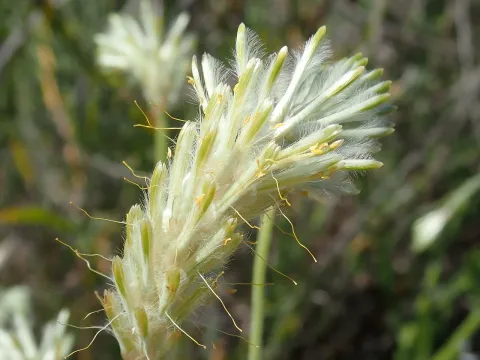
Ptilotus polystachyus
Ptilotus polystachyus
Ptilotus polystachyus, commonly known as featherheads, is a herbaceous plant belonging to the Amaranthaceae family. It is native to arid regions of Australia and is highly prized for its unique, feathery, spike-like inflorescences.
What the section contains
Ptilotus polystachyus
Propagation is typically done via seeds, which require warmth to germinate. Sowing should occur in late winter or early spring using a tray with a sterile, well-draining seed starting mix to ensure the best results.
The seeds are sensitive to light and should not be buried deeply; a light dusting of vermiculite or fine sand is sufficient. Maintaining a consistent temperature between 22 and 25 degrees Celsius is crucial for germination.
Seedlings should be pricked out into individual pots once they develop their first set of true leaves. Because the plant develops a significant taproot, it is essential to be careful during repotting to avoid damaging the root system.
Acclimatization to the outdoors should be gradual. The plants should only be transferred to their permanent outdoor location once all risks of frost have passed and soil temperatures have sufficiently increased.
Ptilotus polystachyus thrives in full sun and requires exposure to direct sunlight for the majority of the day to maintain its compact habit and vibrant inflorescence coloration.
The plant is highly drought-tolerant and requires exceptionally well-draining soil. Sandy or rocky soils are ideal, as they prevent the water stagnation that can lead to root rot and other physiological issues.
Watering should be kept to a minimum. Once the plants are established, they only require supplemental watering during prolonged dry spells, making them a suitable choice for water-wise or xeriscaped gardens.
Soil pH should ideally be neutral or slightly acidic. If the soil is heavy or prone to compaction, the addition of grit or perlite is necessary to improve aeration and drainage within the root zone.
Fertilization should be handled with caution. High levels of nitrogen can cause excessive vegetative growth at the expense of floral development, so a balanced, low-concentration fertilizer is generally recommended.
Root rot is the most significant threat to the health of the plant, usually caused by overwatering or poor soil drainage. Ensuring that the crown of the plant remains dry is a key preventive measure.
Powdery mildew may occur in environments with poor air circulation or high humidity. Promoting airflow by ensuring adequate spacing between plants is the most effective management strategy.
Aphids can occasionally infest the growing tips during the spring season. These can usually be managed with gentle mechanical removal or the application of insecticidal soaps if an infestation occurs.
Spider mites are potential pests during periods of extreme heat and low humidity. Monitoring the underside of the leaves and maintaining moderate moisture around the plants can deter these pests.
Regular sanitation of the growing area, including the removal of dead or dying plant material, helps in minimizing the buildup of pathogens and provides a healthier growing environment overall.