
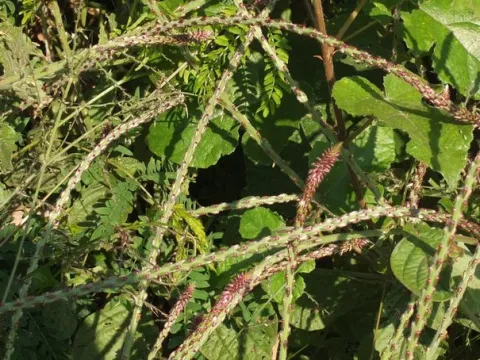
Redroot pigweed
Amaranthus aspera
Redroot pigweed (Amaranthus retroflexus) is a highly adaptable, heat-loving plant that thrives in various agricultural environments. Seeding typically occurs when the soil temperature consistently stays above +12°C, ensuring rapid and uniform germination.
What the section contains
Redroot pigweed
The optimal planting window is usually late spring, allowing the plants to maximize their growth during the warmest months of the year. Due to the tiny size of its seeds, shallow planting at a depth of 1-2 centimeters is crucial for success.
Because the plant possesses high germination energy under warm conditions, it can establish a dense stand quickly. Agronomists often recommend fine seedbed preparation to ensure good soil-to-seed contact, which is essential for small-seeded species.
In modern cultivation systems, seeding rates are carefully managed to achieve optimal plant density. While often considered a weed, when grown as a crop, uniform spacing is used to facilitate mechanical harvesting and weed control.
Rapid early development is a characteristic feature of the genus Amaranthus. Once the seedlings reach the four-leaf stage, they become significantly more resilient and begin to grow at an accelerated rate if moisture and nutrients are available.
Redroot pigweed requires full sun to reach its full potential. As a C4 photosynthetic plant, it demonstrates exceptional efficiency in carbon fixation under high light and temperature conditions, which is typical for mid-summer in most temperate regions.
The plant performs best in fertile, well-drained loamy soils but displays remarkable tolerance to various soil types, ranging from sandy to clay-rich. High levels of nitrogenous fertilizers stimulate robust biomass production.
Water availability is critical during the initial germination phase. Once established, the extensive root system of Amaranthus retroflexus allows it to extract moisture from deeper soil horizons, providing some degree of drought tolerance.
Optimal growth occurs at temperatures between +22°C and +30°C. While the plant can survive cooler conditions, its growth rate drops significantly, making site selection based on thermal accumulation an important factor for growers.
The species is highly responsive to soil enrichment. It thrives in soils with balanced pH levels, though it can tolerate slight deviations. Adequate aeration is vital to prevent root rot in heavier soil types during rainy seasons.
When managed as a forage or grain crop, the biomass yield of redroot pigweed can be impressive. In intensive agricultural settings, it can produce substantial volumes of green fodder, rich in proteins and essential minerals.
Seed yield potential is equally significant, although harvesting is challenging due to the indeterminate growth habit of the plant. Advanced harvesting techniques are required to separate the tiny seeds efficiently from the plant residue.
The nutritive value of the leaves and stems makes it an attractive option for livestock silage. Harvesting before the plants become overly fibrous ensures that the feed remains palatable and highly digestible for cattle.
Yield stability depends heavily on the uniformity of the crop. Modern selective breeding efforts aim to create cultivars that mature uniformly, which is necessary for large-scale agricultural exploitation of the species.
In the context of sustainable agriculture, the ability of Amaranthus retroflexus to produce high biomass in limited timeframes makes it a competitive crop for producers focused on organic feed production and soil improvement.
Common agricultural pests like aphids and various caterpillars can cause damage to the leaves, particularly during the early growth stages. Integrated pest management strategies are often required to maintain crop health.
Fungal diseases such as white rust and root rot can emerge in fields with poor drainage or excessive humidity. Maintaining healthy soil structure and observing proper crop rotation cycles are essential prevention techniques.
Viral infections, often transmitted by insects, may cause leaf distortion and reduced vigor. Monitoring for vectors and minimizing their presence in the field can help safeguard the crop throughout the growing season.
Competition from other fast-growing weeds can stifle pigweed in its early days. Mechanical cultivation between rows is standard practice to ensure the crop maintains its lead over potential competitors.
Despite being a hardy species, the plant is susceptible to certain herbicides if grown as a crop in fields previously treated with residual soil-applied products, which emphasizes the need for careful field history evaluation.
For silage production, harvesting should be performed before the plants set seed, typically during the peak of vegetative growth. This maximizes the protein-to-fiber ratio, providing the most nutritional benefit for animals.
Grain harvest requires careful timing to match the physiological maturity of the seeds. Mechanical harvesting with specialized equipment is necessary to capture the tiny, easily shattered seeds without incurring excessive losses.
Post-harvest cleaning is a mandatory step, as the tiny seeds of Amaranthus retroflexus are often harvested along with chaff and other plant materials. Using fine-mesh sieves allows for effective separation of pure seeds.
Drying is essential to bring the seed moisture content to safe levels for storage, typically below 13%. Proper storage in aerated silos prevents spoilage and maintains the high nutritional quality of the grain.
Efficient management of post-harvest residue is important, especially if the crop is intended to be harvested for seeds, to prevent the proliferation of self-sown plants in the following season.