
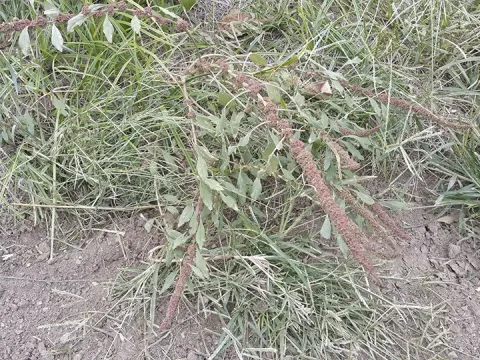
Amaranthus tamariscinus
Amaranthus tamariscinus
Amaranthus tamariscinus is an annual herbaceous plant categorized in modern agronomy as a persistent and highly competitive weed.
What the section contains
Amaranthus tamariscinus
Seed germination in field environments typically occurs in spring once soil temperatures reach a threshold of 15–20 degrees Celsius.
The plant exhibits staggered germination, with seeds emerging throughout the summer months depending on soil moisture availability.
The development cycle is driven by high heat accumulation, ensuring rapid growth during the peak of the agricultural season.
Timely intervention against young seedlings is essential to prevent the plant from establishing its aggressive root system in crop rows.
Belonging to the Amaranthaceae family, this species is noted for its extreme adaptability to diverse environmental and soil conditions.
It favors sunny, open sites and well-drained soil, thriving in environments where other vegetation might struggle due to limited moisture.
Originating from North America, it has spread globally, functioning as an invasive weed due to its high phenotypic plasticity.
The plant utilizes C4 photosynthesis, which allows it to remain highly productive even under intense heat and strong solar radiation.
Its ability to rapidly accumulate biomass allows it to shade out neighboring crops, significantly reducing their yield potential.
The most significant threat associated with this plant is its documented evolution of resistance to various herbicide modes of action.
While pathogens like Sclerotinia or Alternaria may impact the plant, they rarely reduce the overall population significantly.
Pests such as spider mites or certain weevils occasionally feed on the leaves but do not pose a serious biological threat to the plant's survival.
Management requires an integrated approach including deep tillage, crop rotation, and the rotation of herbicide chemistry to break resistance cycles.
- Use of pre-emergence and post-emergence herbicide mixtures
- Integration of cover crops to suppress seedling emergence
- Manual rogueing to prevent seed set in isolated fields