
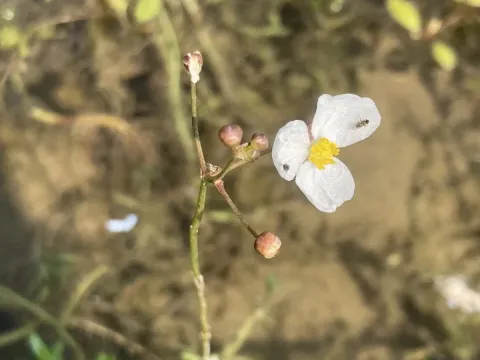
Quill-leaf arrowhead
Sagittaria teres
The Quill-leaf arrowhead, scientifically known as Sagittaria teres, is a rare perennial aquatic plant belonging to the Alismataceae family. It is distinct from more common arrowhead species due to its unique leaf morphology, which consists of cylindrical, quill-like structures.
What the section contains
Quill-leaf arrowhead
The natural range of this species is highly localized, primarily found in restricted coastal regions of North America. It thrives in oligotrophic lakes with sandy or gravelly substrates, where clear water and low nutrient availability are standard conditions for its survival.
Botanically, Sagittaria teres is characterized by its ability to produce both submerged and emergent leaf forms depending on water depth. Its small white flowers emerge on stalks above the water surface during the reproductive phase, which typically occurs in the warmer months of the year.
The plant has strict environmental requirements, demanding high water clarity to ensure sufficient light penetration to the benthos. It is highly sensitive to ecological disturbances, particularly nutrient loading and habitat alteration, which make it a species of conservation concern.
While Sagittaria teres holds no commercial agricultural value as a crop, it serves as a critical indicator species for the health of aquatic ecosystems. Its presence indicates high water quality, and its study is essential for understanding the dynamics of specialized wetland plant communities.