
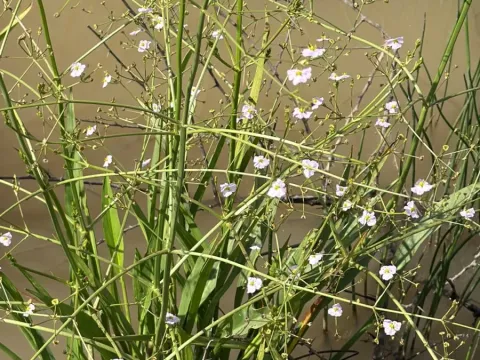
Narrow-leaved water plantain
Alisma lanceolatum
Alisma lanceolatum, known as the narrow-leaved water plantain, belongs to the Alismataceae family. It is a perennial herbaceous aquatic plant characterized by its distinct lanceolate leaves and tall, branched flowering panicles that emerge from the water.
What the section contains
Narrow-leaved water plantain
Native to Eurasia and North Africa, this species thrives in shallow waters, including ponds, irrigation ditches, and riverbanks. It prefers nutrient-rich muddy or silty substrates, which support its rapid growth during the warmer months of the year.
Cultivation requirements focus heavily on hydration. The plant requires a water depth ranging from 0 to 30 cm. While it can withstand temporary exposure to saturated soil rather than standing water, consistent submersion is preferred for optimal biomass production.
Light intensity is another critical factor for this species. It performs best in full sunlight, which promotes vigorous development of the foliage and ensures high fertility of the seeds, which are essential for natural propagation.
In terms of practical use, the plant is highly valued for phytoremediation. Its ability to absorb nutrients like nitrogen and phosphorus from the water column makes it an excellent choice for constructed wetlands and water treatment facilities.
Alisma lanceolatum is generally hardy but can be susceptible to damage from aquatic beetles that feed on the leaf blades, potentially reducing the photosynthetic surface area if infestations are severe.
Fungal pathogens causing leaf spot can occur, particularly in stagnant or poorly aerated water. Maintaining water flow and preventing the buildup of decaying plant matter are effective strategies to mitigate these risks.
Invasive weed competition poses a significant threat during the establishment phase. More aggressive species like cattails or common reeds can easily outcompete the water plantain if the initial density is not managed correctly.
To maintain a healthy stand, it is essential to monitor for nutrient imbalances in the water. Excessive loading can lead to algal blooms, which compete with the water plantain for dissolved gases and light, negatively affecting overall crop vitality.
Routine sanitation is recommended for commercial or environmental sites. Removing dead biomass before winter helps minimize the substrate for pathogens and ensures a fresh start for the plant in the following spring season.