
Longlobe arrowhead
Sagittaria longiloba
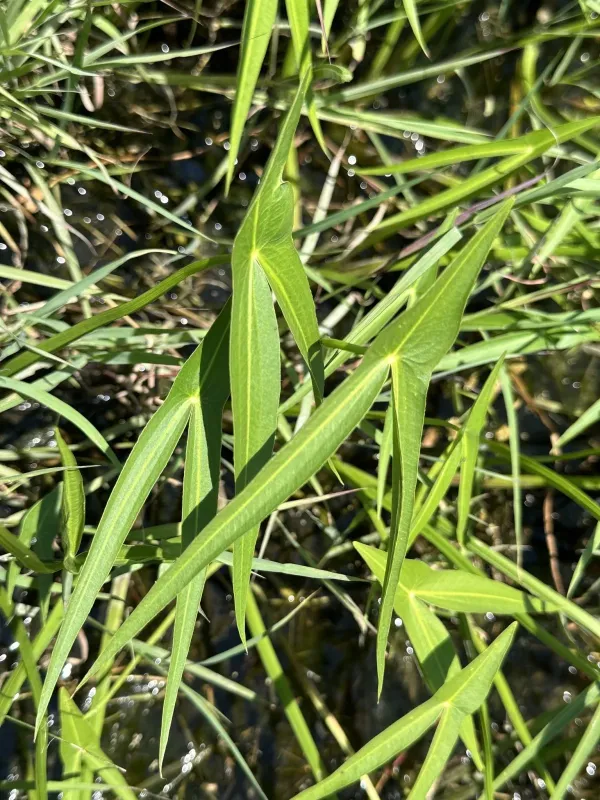
Description
Sowing dates
Longlobe arrowhead (Sagittaria longiloba) is a perennial aquatic plant belonging to the Alismataceae family. In agricultural practices, it is primarily propagated through vegetative means by dividing rhizomes or separating daughter tubers, which ensures the genetic uniformity of the crop throughout the field.
Planting typically occurs in the spring when water temperatures stabilize above 15°C. Rhizomes or propagules are planted into the substrate at a depth of 5–10 cm. Proper spacing, ranging from 40 to 50 cm, is vital to prevent competition and promote the development of large, starchy tubers.
For seed-based propagation, seeds must undergo cold stratification to overcome dormancy. They are usually sown in moist soil beds or very shallow water. While slower than vegetative methods, this technique is valuable for maintaining genetic diversity in experimental plots or long-term selection programs.
Prior to planting, the field must be cleared of invasive aquatic weeds. Applying organic fertilizers directly into the sediment provides the necessary nutrients for robust growth. A well-prepared, nutrient-rich bottom layer is a prerequisite for high yields in commercial cultivation.
Monitoring the water level during the first month after planting is critical. Stabilizing the water depth ensures that plants transition smoothly into active growth stages. Excessive water fluctuations in the early weeks can inhibit root system development and slow down the establishment phase.
Growing requirements
Longlobe arrowhead thrives in high-light environments, which are essential for its photosynthetic activity and the subsequent energy storage in tubers. Shade significantly limits the growth rate and overall biomass production, so full sun exposure is a requirement for commercial success.
The optimal temperature range for the active growth of this species is between 20°C and 30°C. While the plant is quite hardy, extreme winter freezes require a minimum water depth to act as insulation for the rhizomes buried in the mud, preventing damage to the dormant parts.
Soil quality is paramount, requiring a silty or clay-heavy substrate rich in organic matter. A neutral to slightly acidic pH is ideal. In controlled irrigation systems, monitoring for salt accumulation is necessary, as high salinity levels are detrimental to the plant’s health and productivity.
The plant prefers still or slow-moving water bodies. In industrial settings, irrigation channels or flooded paddy-like plots are ideal. Excessive flow rates can disturb the root zone and interfere with the structural development of the plant, often leading to lower tuber quality.
Water depth plays a crucial role in plant morphology. A depth of 15–30 cm is considered optimal. In these conditions, the plant invests more energy into tuber expansion rather than stem elongation, which is the desired outcome for harvest-oriented agricultural operations.
Main diseases and pests
The primary threats to longlobe arrowhead are typically related to the health of the aquatic ecosystem in which it grows. Excessive growth of filamentous algae can form mats over the water surface, competing with the crop for light and nutrients, which often requires manual removal or water quality management.
Pests such as aquatic snails and certain beetle larvae can consume the leaves, leading to reduced photosynthesis. Integrated pest management strategies, including the introduction of natural predators or balanced water chemistry, are preferred over chemical pesticides, which could harm the aquatic habitat.
Pathogenic fungi can cause root rot, especially in poorly circulated water or when water temperatures stay stagnant at high levels for prolonged periods. Improving water turnover and ensuring oxygenation are effective preventative measures against fungal outbreaks in a commercial field.
Wild waterfowl and rodents can also pose a significant threat to young plantations by feeding on tubers or tender shoots. Fencing or protective netting around the cultivation area is often necessary to prevent significant crop loss caused by foraging animals during the active growth season.
Nutrient imbalances in the water column can trigger secondary diseases. For example, excessive phosphorus levels may promote the growth of bloom-causing organisms, which deplete oxygen levels at night, stressing the arrowhead plants and making them more susceptible to opportunistic pathogens.
Harvesting
Harvesting longlobe arrowhead is scheduled for the late autumn when the above-ground vegetation enters senescence. At this stage, the plant has effectively translocated its energy reserves into the underground tubers, ensuring maximum size and starch content for the harvest.
The process generally involves draining the water from the field, which allows for easier access to the tubers buried in the sediment. In many regions, manual labor remains the most reliable method for extraction to avoid damaging the delicate skin of the tubers during the digging process.
Once harvested, the tubers are immediately cleaned with water to remove mud and organic debris. They should be stored in a cool, humid environment to prevent dehydration. Rapid cooling post-harvest is essential to maintain the structural integrity and nutritional value of the product.
Grading is performed based on size and tuber health. High-quality, large tubers are selected for market sale, while smaller ones can be reserved as propagation stock for the following year. Proper storage conditions at 2–4°C prevent premature sprouting and fungal decay during storage.
Advanced agricultural operations may utilize mechanical harvesters that sift the sediment, though this requires careful calibration to minimize tuber breakage. Efficient handling post-harvest is a key factor in ensuring a long shelf life and meeting the requirements of food processing industries.