
Sagittaria stagnorum
Sagittaria stagnorum
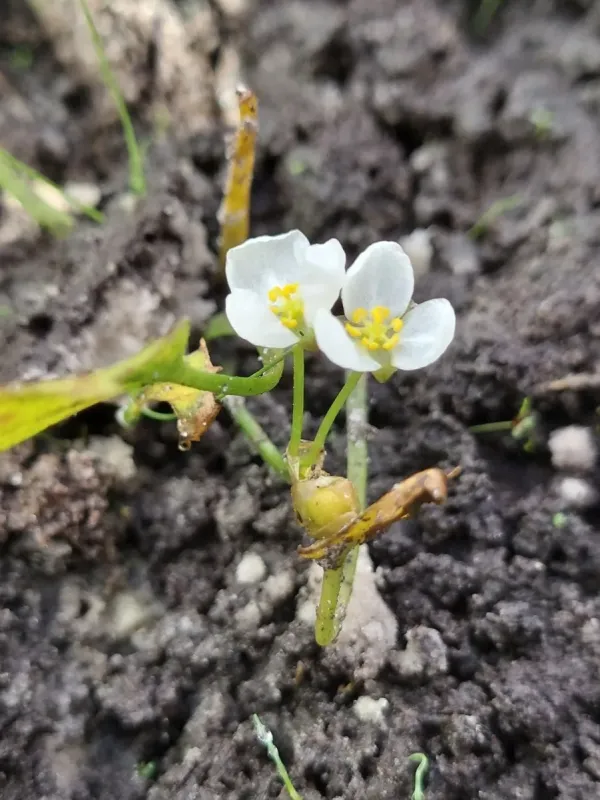
Description
Growing requirements
Sagittaria stagnorum is a perennial herbaceous aquatic plant belonging to the Alismataceae family. Naturally occurring in stagnant or slow-moving water bodies, it is well-adapted to shallow environments where it creates stable colonies on silty or clayey substrate layers.
The plant demonstrates significant biological resilience but thrives best under conditions of moderate water temperature and sufficient sunlight exposure. Unlike some other hydrophytes, it prefers environments where the water level remains relatively stable throughout the growing season to ensure optimal leaf development.
Regarding soil requirements, Sagittaria stagnorum benefits from nutrient-rich organic sediments. In agricultural or constructed wetland settings, maintaining a proper balance of dissolved minerals is essential for plant vigor, as it significantly enhances the photosynthesis process in its distinct arrow-shaped leaves.
Agricultural techniques for this species focus on site preparation, specifically managing the depth of the water column which should ideally not exceed 40-60 centimeters for long-term survival. Proper spacing is crucial to prevent resource competition and ensure robust rhizome expansion during the summer months.
The species also serves as a critical component in environmental bio-engineering. Its ability to absorb excess nitrogen and phosphorus makes it an excellent choice for improving water quality in agricultural drainage systems or irrigation reservoirs, provided that invasive algal species are monitored.
Harvesting
Harvesting strategies for Sagittaria stagnorum involve selective thinning at the end of the vegetative cycle. The biomass collected can be effectively repurposed for specialized organic fertilizers, aiding in soil conditioning due to the plant's high content of structural organic compounds accumulated during its growth.