
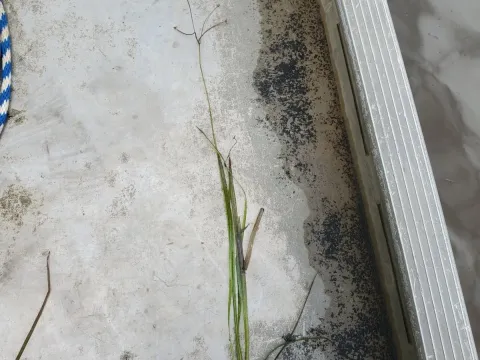
Sagittaria subulata
Sagittaria subulata
Sagittaria subulata, commonly known as the dwarf arrowhead, is a perennial aquatic plant belonging to the Alismataceae family. It is native to the Americas, where it naturally inhabits the coastal regions and marshy areas of various freshwater and brackish water bodies.
What the section contains
Sagittaria subulata
This crop thrives in water temperatures ranging from 20 to 28 degrees Celsius. It is highly adaptable to a variety of water hardness levels, but it requires stable chemical parameters to maintain vigorous growth and avoid osmotic stress during the vegetative phase.
The plant demands high light intensity to sustain its compact, grass-like appearance. When light levels are insufficient, the leaves become elongated and brittle, significantly reducing the quality of the foliage and slowing down the production of new runners.
A nutrient-rich substrate is essential for the healthy development of its root system. A fine-grained, well-draining material, such as aquatic soil or fine gravel, allows the rhizomes to spread efficiently and anchor the plants firmly against the water current.
Propagation is primarily achieved through runners that sprout from the main crown. Growers typically prune these runners to control density and promote more robust growth in individual plants, ensuring optimal spacing for photosynthesis and nutrient uptake.
The primary threat to the crop is the overgrowth of filamentous algae. These invasive organisms compete directly for nutrients and block essential light, which often leads to the stunted development or complete decay of the Sagittaria subulata leaves.
Iron deficiency frequently manifests as chlorosis, where the leaves lose their vibrant green color and turn yellowish. This condition weakens the plant's structural integrity and makes it more susceptible to opportunistic secondary infections by pathogenic fungi.
Root damage resulting from improper handling during transplanting is a major concern for commercial cultivation. Any necrotic tissue in the root zone can serve as a focal point for bacterial rot, which rapidly spreads through the rhizome network.
Aquatic pests, including certain species of snails and crustacean larvae, may feed on the tender, newly emerged leaves. Regular inspections and the implementation of biological control methods are necessary to preserve the aesthetic and botanical quality of the crop.
Environmental instability, such as sudden shifts in water pH or a rapid change in lighting duration, can trigger a stress response. This often leads to leaf shedding, which leaves the crown exposed and increases the risk of plant mortality in intensive systems.