
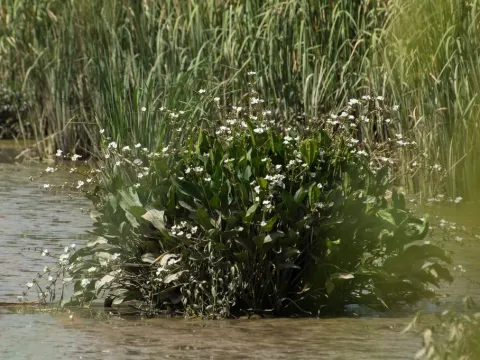
Echinodorus
Echinodorus L.C. Rich ex Engelm.
Echinodorus, commonly known as sword plants, is a genus of perennial aquatic or semi-aquatic plants belonging to the Alismataceae family. They are characterized by a rosette growth pattern and distinct root systems that anchor them effectively in substrate.
What the section contains
 Creeping burhead
Echinodorus cordifolius (L.) Griseb.
Creeping burhead
Echinodorus cordifolius (L.) Griseb.
 Echinodorus schlueteri
Echinodorus schlueteri
Echinodorus schlueteri
 Echinodorus uruguayensis
 Arechav.
Echinodorus uruguayensis
Echinodorus uruguayensis Arechav.
 Echinodorus uruguayensis x Echinodorus schlueteri
Echinodorus uruguayensis x Echinodorus schlueteri
Echinodorus uruguayensis x Echinodorus schlueteri
 Narrow-leaf Amazon sword
Echinodorus angustifolius Rataj
Narrow-leaf Amazon sword
Echinodorus angustifolius Rataj
Echinodorus
Native to the Americas, these plants are primarily found in marshes, rivers, and seasonal floodplains. Their ability to thrive in both submerged and emersed conditions makes them highly versatile for various cultivation setups, including aquariums and wet gardens.
Successful growth requires a nutrient-dense substrate, as these plants primarily feed through their root systems. High-quality iron supplements and essential trace minerals are critical for maintaining healthy, vibrant leaf coloration.
The plants demand moderate to high light intensity to sustain their physiological processes. Insufficient light results in elongated, weak leaf stalks and loss of color, which eventually stunts the plant's overall growth potential.
Temperature and water chemistry are fundamental for Echinodorus. They thrive in temperatures between 22°C and 28°C with stable water parameters. Maintaining a balanced environment with proper CO2 and fertilizer dosage ensures robust and sustainable development.
Nutrient deficiencies represent the most significant threat to the plant's appearance and health. Iron deficiency, for instance, leads to interveinal chlorosis, which causes the leaves to lose their healthy green or reddish pigmentation.
Algal growth, particularly filamentous algae, poses a constant risk to the leaf surfaces of mature plants. This often occurs when there is an imbalance in nutrient levels or excessive lighting, which outpaces the plant's nutrient uptake capacity.
Pests such as aphids or spider mites can infest the emersed leaves if the plant is grown in a greenhouse or open-top system. These pests suck the sap from the foliage, leading to malformed growth and weakened immunity.
Root rot is a common ailment caused by oxygen-depleted substrate or over-fertilization. It is essential to ensure that the substrate is not overly compacted, allowing for adequate circulation around the root ball to prevent anaerobic conditions.
Sudden shifts in water parameters can trigger a stress response known as leaf melting, where the plant prematurely sheds its foliage. Consistency in maintenance is the primary defense against this rapid tissue degradation.