
Echinodorus schlueteri
Echinodorus schlueteri
Description
Growing requirements
Echinodorus schlueteri is a popular aquatic rosette plant belonging to the Alismataceae family. Native to the tropical regions of South America, this species thrives in river floodplains, making it highly adaptable to submerged cultivation in freshwater aquariums.
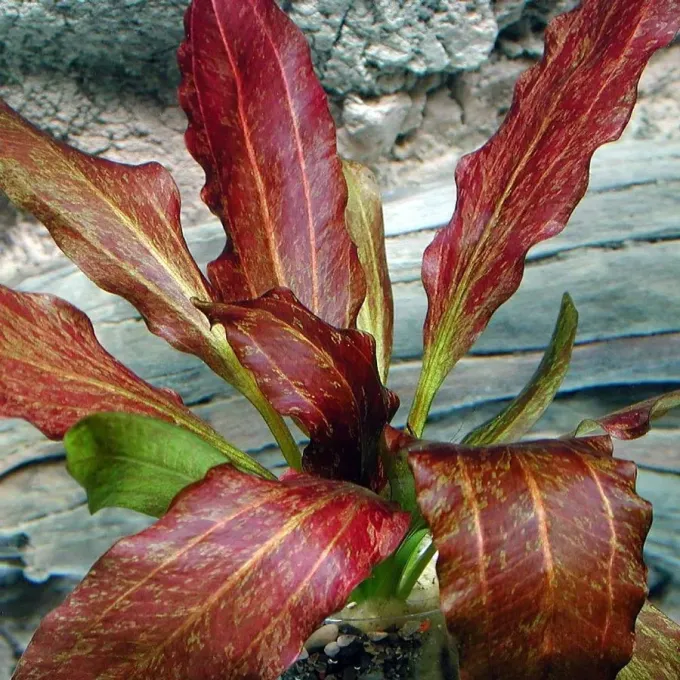
The plant features a compact rosette of ovate leaves that grow on short petioles. Depending on the lighting conditions and mineral availability in the substrate, the foliage displays a vibrant green hue, often decorated with distinctive dark brown spots that add to its decorative value.
Optimal growth is achieved in water temperatures ranging from 22°C to 28°C. The species prefers slightly acidic to neutral water (pH 6.5–7.5). Providing stable conditions is essential to prevent shock and ensure consistent leaf development throughout the growing season.
A nutrient-rich substrate is vital for Echinodorus schlueteri, as its robust root system is the primary pathway for nutrient absorption. Using root tabs or enriched soil containing clay components significantly boosts its health, promoting lush and rapid growth.
Lighting requirements are moderate to high. Proper light exposure helps maintain the compact shape of the rosette; under dim lighting, the plant tends to stretch, lose its structural integrity, and fade in color, becoming less visually appealing.
Main diseases and pests
The primary threat to the health of this species is root rot, typically caused by compacted, anaerobic substrate. If the soil does not allow for proper water circulation, the roots can succumb to bacterial decay, ultimately leading to the decline of the entire plant.
Aquarium pests, particularly certain species of snails, may graze on the young, soft leaves if other food sources are scarce. Maintaining a balanced ecosystem and controlling the snail population is usually sufficient to mitigate this risk.
Nutrient deficiency is another common issue, often manifesting as chlorosis, where leaves turn yellow due to a lack of iron or magnesium. Regular fertilization with liquid and root-based supplements is necessary to keep the foliage healthy and vibrant.
Algal blooms on the leaf surface, such as black beard algae, can occur when the balance between lighting, CO2 injection, and fertilizer dosage is disrupted. Mechanical cleaning combined with adjustments to the water chemistry is the standard recovery approach.
Transplantation stress is frequently observed, as the plant needs time to acclimate to new environmental parameters. During this period, older leaves may melt away, but as long as the crown remains firm, the plant will produce new, healthy growth in due time.