
Narrow-leaf Amazon sword
Echinodorus angustifolius Rataj
Description
Growing requirements
The narrow-leaf Amazon sword (Echinodorus angustifolius) is a species of the Alismataceae family. Its natural origin is associated with the tropical regions of South America, primarily within the river systems of Brazil.
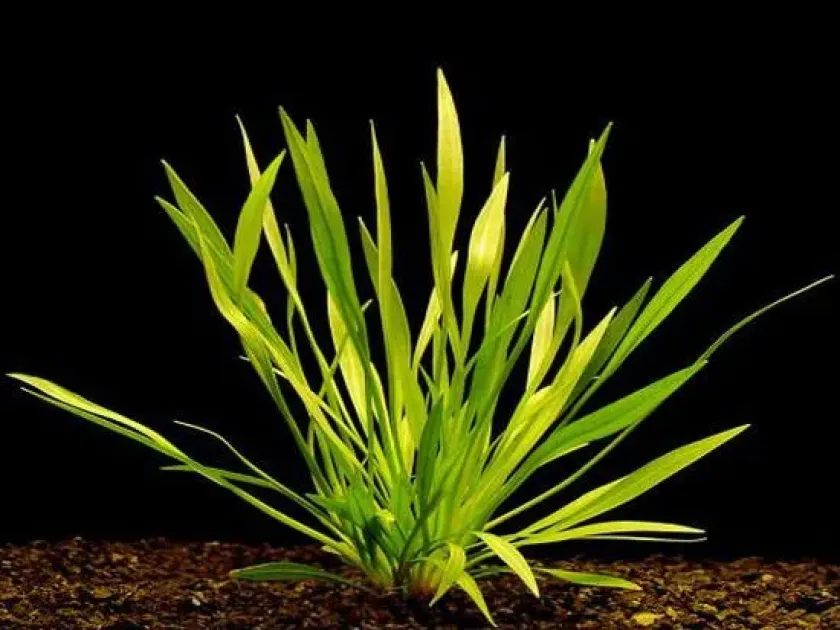
Botanically, this plant is distinguished by its narrow, ribbon-like foliage that creates a graceful, flowing effect in submerged environments. It is an excellent choice for background plantings in aquariums.
The species has specific lighting requirements, necessitating high-intensity light to thrive. Proper light exposure is essential for maintaining its vibrant green coloration and preventing the leaves from becoming stunted.
The optimal water temperature for this crop ranges from 22 to 28 degrees Celsius. Stable water chemistry is preferred, though the plant is generally adaptable to varying levels of water hardness found in standard aquarium setups.
A nutrient-rich substrate is crucial for successful cultivation. It is recommended to use specialized plant substrates enriched with clay, which provide the necessary minerals for the development of a robust root system.
Harvesting
Propagation is primarily vegetative, occurring via adventitious plantlets that grow along long runners or flower stalks. This allows the plant to naturally spread and colonize areas of the substrate.
When the daughter plantlets have developed their own leaves and a sufficient root mass, they can be carefully detached from the runner. This method ensures successful propagation for commercial or hobbyist use.
Maintenance includes regular fertilization using root tabs or liquid supplements to ensure steady growth. Periodic maintenance of the substrate is also necessary to prevent compaction and allow for proper root aeration.
Pruning is an essential practice to keep the plants healthy and aesthetically pleasing. Removing older leaves and overcrowded sections promotes better water circulation and allows for the development of new, healthy shoots.
Maintaining proper CO2 levels in the aquarium environment significantly enhances the growth rate and structural integrity of the plant, making it a reliable choice for aquascaping and aquatic farming.