
Echinodorus uruguayensis
Echinodorus uruguayensis Arechav.
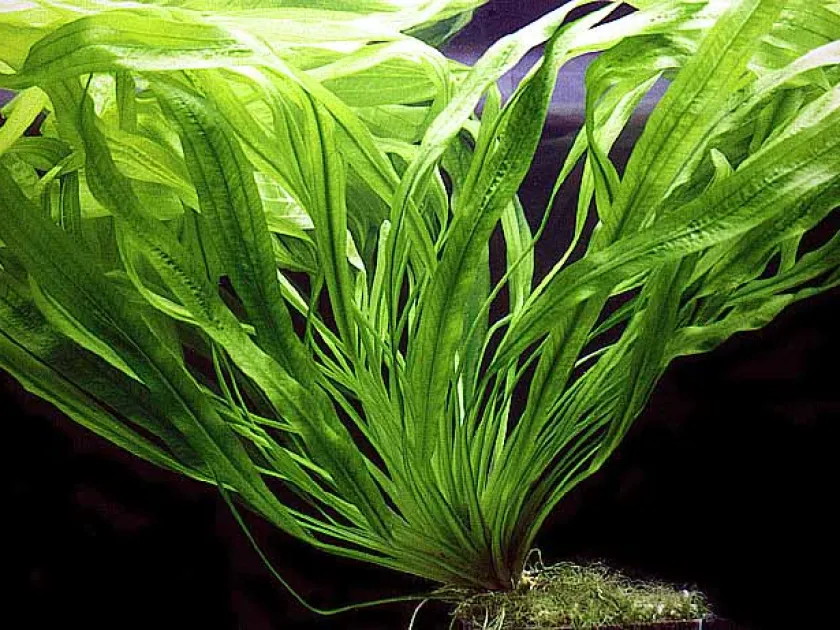
Description
Growing requirements
Echinodorus uruguayensis belongs to the Alismataceae family. It is a popular aquatic plant native to South America, spanning across Uruguay, Argentina, and southern Brazil, where it thrives in riverine habitats and slow-moving bodies of water.
The plant demands a nutrient-rich substrate to support its robust root system. A layer of fine gravel mixed with clay-based additives provides the necessary minerals, particularly iron, which is essential for maintaining the plant's deep green foliage.
Temperature requirements for this species typically range between 18°C and 26°C. It is known for its adaptability, yet it prefers soft to medium-hard water with a slightly acidic to neutral pH balance to ensure steady vegetative development.
Lighting conditions should be moderate to high to encourage the plant's characteristic lanceolate leaf formation. A photoperiod of 10 to 12 hours is recommended to facilitate proper photosynthesis and avoid the legginess associated with insufficient light.
Agrotechnical maintenance involves regular water exchanges and the addition of CO2, which significantly enhances growth rates. Proper circulation around the leaves ensures that nutrients are distributed evenly, preventing the stagnation of water zones.
Main diseases and pests
The primary threats to this plant are various forms of algae, including black beard algae and green spot algae. These pests thrive when there is an imbalance in nutrient levels or an inconsistent lighting schedule.
Chlorosis is a common physiological disorder, usually signaling a deficiency in micronutrients like iron or manganese. This manifests as yellowing of the leaf blades, which can be corrected by injecting root tabs into the substrate.
Root rot is a significant risk if the substrate becomes anaerobic. If the sediment is too fine or compacted without proper aeration, the roots may struggle to respire, leading to systemic decline and tissue decay.
While insect pests are rarely an issue in submerged environments, aquatic snails can occasionally graze on the foliage. Maintaining a healthy balance in the ecosystem is usually sufficient to discourage such activities.
To ensure long-term health, growers should practice regular maintenance, including the removal of decaying leaves and monitoring water quality parameters to keep the plant's environment stable and free from pathogens.