
Creeping burhead
Echinodorus cordifolius (L.) Griseb.
Description
Growing requirements
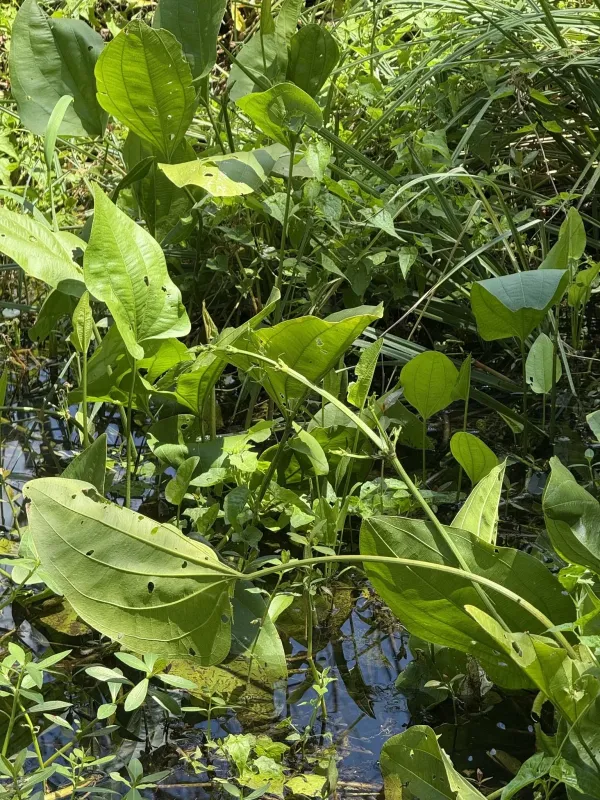
Echinodorus cordifolius, commonly known as the creeping burhead, is a perennial aquatic plant species belonging to the Alismataceae family. It is widely recognized for its robust growth habit, featuring distinct heart-shaped leaves and a strong, extensive root system.
Originating from the tropical regions of the Americas, this species thrives in swampy areas, riverbanks, and pond margins. Its versatility allows it to grow both submerged in water and as an emergent plant in humid greenhouse environments or paludariums.
The cultivation of this plant requires a nutrient-rich substrate, preferably with a high content of organic matter and essential minerals. To support vigorous development, temperatures should be consistently maintained between 22°C and 28°C, as rapid fluctuations can induce dormancy.
Light intensity is a paramount factor for the successful growth of Echinodorus cordifolius. It requires strong, full-spectrum lighting for at least 10–12 hours a day to prevent etiolation and to promote the development of lush, dense foliage characteristic of the species.
Cultural practices include the regular application of substrate-based fertilizers, as the plant relies heavily on nutrient absorption through its roots. Maintaining a neutral or slightly acidic water pH is also essential for nutrient bioavailability and optimal plant health.
Main diseases and pests
The primary threats to this culture are fungal and bacterial infections often triggered by poor water quality or anaerobic conditions in the substrate. Regular maintenance, such as siphoning excess organic debris, is crucial to prevent the onset of root and rhizome rot.
Pests such as snails and aquatic insect larvae can cause significant damage to the soft, developing leaves. In terrestrial or greenhouse settings, spider mites may emerge as a threat, requiring careful observation and biological or chemical control measures.
Nutrient deficiencies, particularly involving iron or magnesium, manifest as chlorosis, where the leaves lose their deep green pigmentation. Corrective action involves the precise adjustment of micro-nutrient supplementation to restore healthy leaf production.
Mechanical damage to the foliage during maintenance can serve as an entry point for pathogens. It is recommended to use sanitized tools when pruning to minimize the risk of infection and to ensure the longevity of the plant specimens.
Stressed plants are significantly more susceptible to environmental threats. By ensuring stable parameters and sufficient nutrient availability, growers can maintain a robust plant population that is naturally more resistant to common diseases and pest infestations.