
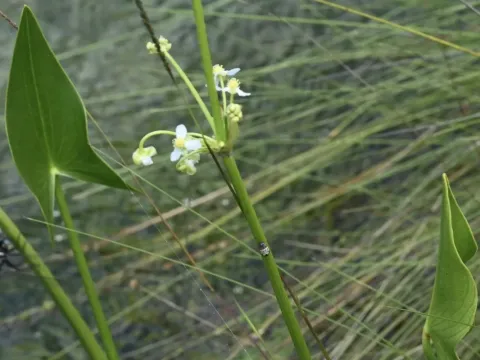
Limnophyton
Limnophyton
Limnophyton is a genus of perennial herbaceous plants belonging to the Alismataceae family. These plants are specialized for wetland habitats, showing a remarkable physiological adaptation to semi-aquatic life cycles.
What the section contains

Limnophyton
The native distribution of Limnophyton spans the tropical and subtropical regions of Africa and Asia. In the wild, they typically inhabit shallow freshwater edges, marshes, and periodically flooded lowlands where nutrients are abundant.
Successful cultivation of Limnophyton requires a warm climate with consistently high humidity levels. The species is highly sensitive to cold, making it unsuitable for regions experiencing sub-zero temperatures without controlled greenhouse environments.
For optimal growth, the substrate should consist of rich silt or clay soils that remain saturated with water. The plant performs well in conditions of partial shade but requires adequate natural light intensity to maintain vigorous leaf development.
Agriculturally, Limnophyton is valued for its potential in subsistence farming, where its rhizomes and leaves serve as localized food sources. Additionally, it has gained attention for its ability to absorb excess nutrients, aiding in the phytoremediation of contaminated water bodies.
The primary threats to Limnophyton are fungal infections of the rhizomes, often triggered by water stagnation and a lack of dissolved oxygen. Maintaining water circulation is essential to prevent root rot and ensure plant longevity.
Pests, particularly aquatic snails and various insect larvae, can severely damage the foliage of young plants. Monitoring and mechanical removal remain the most effective ways to mitigate damage in small-scale cultivation.
Invasive weed species often compete with Limnophyton for space and nutrients. Manual weeding or managing water levels is necessary to ensure the crop establishes itself effectively without excessive external pressure.
Viral pathogens may cause chlorosis and stunted growth. Because the plant is often utilized as a food source, the application of chemical pesticides is discouraged, favoring integrated pest management instead.
The accumulation of environmental pollutants in plant tissues represents a significant risk for agricultural products intended for consumption. Therefore, it is critical to ensure that the water source is free from heavy metals and toxic chemicals.