
Megaskepasma
Megaskepasma
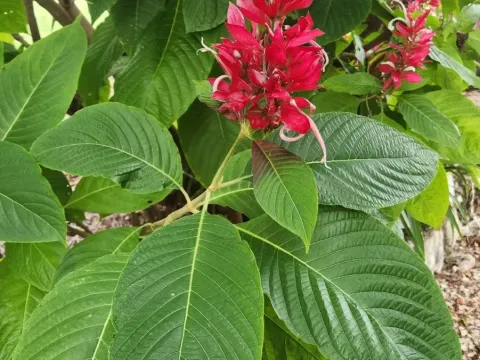
Megaskepasma (Megaskepasma erythrochlamys) is a prominent member of the Acanthaceae family. Known commonly as the Brazilian Red Cloak, this evergreen shrub is prized for its architectural beauty and vibrant inflorescences that mimic flowers.
What the section contains

Megaskepasma
Native to the humid tropical climates of Venezuela and Ecuador, this plant thrives in environments that mimic rainforest conditions. It is strictly a warm-weather species that cannot tolerate frost, requiring controlled environments in cooler global climates.
Botanically, it is characterized by large, glossy, deep-green foliage and dramatic red bracts that encase smaller, white, tubular true flowers. These bracts can persist for several weeks, providing a long-lasting aesthetic appeal to greenhouses and interior landscapes.
Optimal growth requires bright, filtered light and high humidity levels. In greenhouse settings, maintaining moisture in the ambient air is just as crucial as watering the root zone to prevent leaf curling and promote healthy expansion of the canopy.
The plant demands a nutrient-rich, well-draining soil medium. A potting mix consisting of peat, bark, and perlite is ideal to facilitate air circulation around the roots, as the species is highly susceptible to root suffocation if kept in heavy, waterlogged clay soils.
Common agricultural pests include spider mites and scale insects. These pests often congregate on the undersides of the broad leaves, exploiting stress caused by low humidity levels or fluctuating indoor temperatures during the winter period.
Fungal diseases are frequently linked to poor sanitation and over-watering. Providing adequate spacing between plants and ensuring good airflow is the most effective biological defense against the onset of fungal pathogens that attack the stem and root system.