
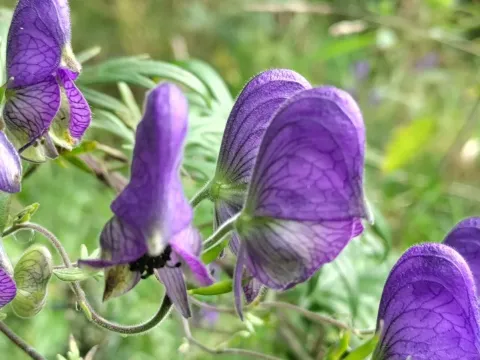
Aconitum volubile
Aconitum volubile
Aconitum volubile, commonly known as climbing monkshood, is a perennial herbaceous plant belonging to the Ranunculaceae family. It is typically propagated via seeds or rhizome division.
What the section contains
Aconitum volubile
Seeds require a natural cold period to break dormancy, making autumn sowing in open ground the most reliable method for successful spring germination.
When sowing in spring, seeds must be subjected to artificial stratification in a refrigerator for several months to ensure a high germination rate.
Seeds should be sown at a shallow depth of approximately 1-2 centimeters in well-prepared, loose soil to facilitate the emergence of delicate seedlings.
The spacing for transplanting seedlings or rhizome segments should be at least 50 centimeters apart to allow for vigorous growth and air circulation.
This crop prefers rich, fertile loam or sandy-loam soils that offer excellent drainage, as the plant is highly sensitive to waterlogging around its roots.
While moisture is essential for the active growth phase, stagnant water can lead to rapid fungal decay; thus, maintaining optimal moisture levels is key.
Aconitum volubile naturally thrives in semi-shaded areas, mimicking woodland or mountain edges, and should be protected from harsh, direct sunlight.
The plant is adapted to moderate climates and displays high winter hardiness, allowing it to survive freezing temperatures provided there is snow cover.
Soil fertility should be maintained by incorporating organic matter like compost before planting and applying periodic mineral fertilizer applications during the vegetative season.
As a specialized medicinal crop, the cultivation of Aconitum volubile is strictly intended for the pharmaceutical industry, given its potent chemical profile.
The primary harvest units are the roots and tubers, which accumulate bioactive alkaloids that are extracted under strictly controlled safety conditions.
Yield capacity significantly increases as the plant matures, typically reaching peak production levels by the third or fourth year after initial establishment.
Aerial parts of the plant are also harvested during the peak flowering stage when the concentration of medicinal compounds is at its maximum.
Post-harvest handling is critical, requiring quick transport and controlled drying processes to ensure the stability of the plant's chemical constituents.
The crop is generally robust but can become susceptible to powdery mildew if the planting density is too high or if air circulation is inadequate.
Root rot is the most serious threat to the crop, particularly in heavy or poorly drained soils, necessitating careful site selection and soil management.
Aphids and spider mites are common pests that feed on the foliage; while they rarely kill the plant, they can significantly reduce overall vigor and harvest quality.
Slugs and snails can cause damage to young foliage during wet weather, making it necessary to implement manual or barrier-based pest control measures.
Integrated pest management, focusing on cultural practices rather than harsh pesticides, is recommended for this sensitive medicinal plant.
Roots should be harvested in late autumn, following the end of the growth season, as this is when the bioactive alkaloids reach their peak concentration.
Care must be taken during the digging process to remove soil debris immediately and perform the initial cleaning before the drying stage commences.
Workers must wear full protective gear, including heavy-duty gloves, as the plant contains potent toxins that can be absorbed through the skin.
Drying is conducted in well-ventilated, dark sheds at low heat to preserve the integrity of the plant's sensitive chemical structure for further processing.
Finished raw material must be stored in secure, clearly labeled containers in a restricted-access facility due to the high toxicity of the plant material.