
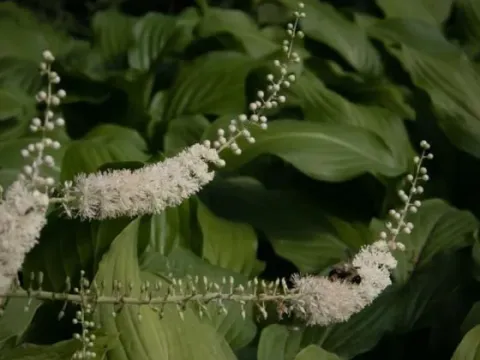
Actaea heracleifolia
Actaea heracleifolia
Sowing Actaea heracleifolia seeds is typically done during the autumn to allow for natural stratification throughout the winter. These seeds require a cold period to break dormancy and ensure high germination rates in the spring.
What the section contains
Actaea heracleifolia
For spring planting, artificial stratification in a controlled environment at low temperatures is necessary for several months. Seeds should be sown at a depth of 1-2 cm in a moist, organic-rich soil medium.
Transplanting seedlings to their final location is best performed in the early spring while the plant is still dormant. Proper spacing is crucial to prevent competition and allow the broad foliage to develop fully.
Soil preparation before sowing involves incorporating compost and ensuring good drainage. A well-structured soil bed is essential for the establishment of a strong and extensive root system.
Regular monitoring of seedling development after emergence is important to identify any pests early. Maintaining consistent soil moisture during the first few weeks after sowing is vital for success.
Actaea heracleifolia, a member of the Ranunculaceae family, thrives in shaded or semi-shaded environments. It is adapted to woodland conditions and avoids direct, intense sunlight that can scorch its large leaves.
The plant requires loose, humus-rich soil that holds moisture but does not remain waterlogged. Good drainage is critical, as stagnant water is the primary cause of root failure in this crop.
Ideally, the pH of the soil should be near neutral to slightly acidic. Providing a thick layer of organic mulch helps maintain moisture levels and protects the roots from extreme temperature fluctuations.
Protection from strong winds is advisable to keep the foliage intact and healthy throughout the growing season. A location sheltered by larger shrubs or trees is often optimal for this plant.
During the growing season, moderate irrigation is necessary, particularly during periods of low rainfall. Care should be taken to water the base of the plant to keep the leaves dry and prevent fungal outbreaks.
The primary economic output of Actaea heracleifolia is its medicinal root mass, used in traditional and modern botanical preparations. Yield is heavily dependent on the plant age and growing environment.
Harvesting for commercial purposes should ideally occur when the plants are 3-4 years old. This duration allows for the sufficient accumulation of secondary metabolites within the rhizomes.
An average yield of raw root material can reach up to 1 kg per square meter under optimal cultivation conditions. After drying, the weight reduces significantly, resulting in a high-density active ingredient.
Seed production is also managed to provide a sustainable source for future planting cycles. Collecting seeds at the peak of maturity is necessary for maintaining a high germination potential.
Advanced farming practices, such as precise fertilization schedules, can enhance total biomass production. This results in higher profits for commercial cultivators who prioritize crop health.
Fungal pathogens such as root rot are the most common threat, usually triggered by poor soil aeration or excess moisture. Preventive measures include ensuring a well-drained site and avoiding overcrowding.
Pests like aphids and leaf-eating beetles can cause significant damage to the plant foliage. Early intervention using appropriate biological or chemical treatments can help minimize damage to the crop.
Slugs and snails are particularly problematic during the spring season when new growth is tender. Using barriers or slug bait is a common strategy to protect young plantings from severe grazing.
Nematode infestation can hinder growth and weaken the plant overall. Utilizing clean, certified planting stock and following proper crop rotation patterns are essential to preventing long-term soil contamination.
General hygiene, such as removing dead foliage at the end of the season, reduces the overwintering sites for many pathogens. Maintaining a clean field environment is key to minimizing threat levels.
Harvesting occurs in late autumn, once the foliage has turned yellow and died back. At this point, the plant has retreated into dormancy, and the nutrients have concentrated within the roots.
Garden forks are the preferred tool for lifting the roots to avoid damaging the rhizomes. Careful extraction is necessary to ensure the entire valuable root system is collected efficiently.
Post-harvest, the roots are thoroughly cleaned with cold water to remove soil and impurities. This step is critical to ensuring the quality and standard of the final medicinal product.
Drying is conducted in specialized, ventilated rooms at temperatures not exceeding 45 degrees Celsius. Slow and uniform drying is necessary to prevent spoilage and maintain chemical integrity.
Proper storage in paper bags or wooden containers in a cool, dark, and dry place ensures the longevity of the harvest. This protects the product from moisture and light-induced degradation.