
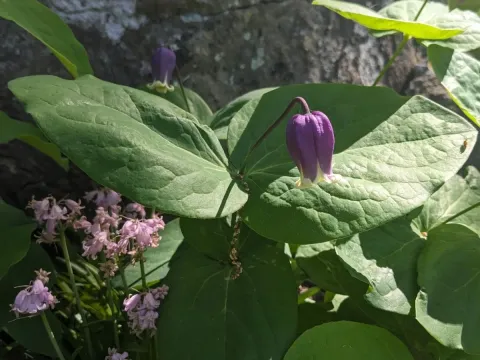
Addison's leather flower
Clematis addisonii
Addison's leather flower (Clematis addisonii) is a unique perennial species belonging to the Ranunculaceae family. It is endemic to a specific region in the United States, primarily found in the limestone bluffs and mountainous terrains of Virginia.
What the section contains
Addison's leather flower
Botanically, this plant is categorized as a bush clematis rather than a climbing vine. It typically grows as a small, woody-based herb with upright or nodding stems that usually reach a height of 30 to 60 centimeters, forming an attractive, compact clump in the garden.
Cultivation requirements for this species are specific due to its natural habitat preferences. It thrives in well-drained, alkaline soils and requires a sunny location, although it appreciates some light shade during the peak heat of the afternoon in warmer climates.
Soil structure is critical for this plant; it demands excellent drainage to prevent crown rot. In garden settings, amending heavy soils with grit or coarse sand is recommended to mimic the rocky conditions the plant encounters in its native North American environment.
This clematis is primarily utilized in horticultural settings, specifically in rock gardens, native plant collections, and front-of-border arrangements. It is highly prized by collectors for its distinctive, urn-shaped, thick-textured flowers that appear in shades of violet and pink.
The most significant pathological threat to Clematis addisonii is fungal wilting, often caused by pathogens that thrive in overly wet soil conditions. This can cause sudden dieback of stems, making proper moisture management the most vital aspect of its care.
Preventative measures against fungal infections include ensuring optimal spacing between plants to facilitate air circulation and avoiding overhead watering, which can encourage leaf spots and other moisture-related diseases that compromise plant vitality.
Common garden pests such as slugs and snails are significant threats to young shoots, especially during the early spring growth phase. Protecting the base of the plant with physical barriers or non-toxic deterrents is recommended to preserve the foliage.
Sucking insects, particularly aphids, can occasionally colonize the flower buds and young leaves. Regular inspection and the use of insecticidal soaps or horticultural oils can help manage these infestations without harming the plant's delicate tissues.
Root rot remains the most common issue in poorly maintained beds. If the plant shows signs of chlorosis or stunted growth, it is essential to check the soil moisture levels and potentially improve drainage before the damage becomes irreversible for the perennial root system.