
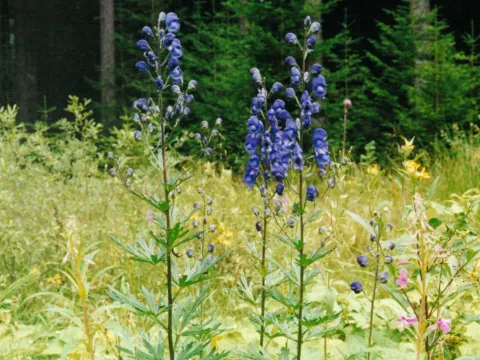
Aconitum plicatum
Aconitum plicatum
Aconitum plicatum, commonly known as the folded monkshood, is a perennial herbaceous plant belonging to the Ranunculaceae family. It is native to the mountainous regions of Central Europe, typically thriving in cool, moist habitats such as alpine meadows and shaded forest edges.
What the section contains
Aconitum plicatum
This crop requires fertile, humus-rich soil with a slightly acidic to neutral pH level. Proper drainage is essential, as the plant's root system is highly susceptible to rot when exposed to waterlogged conditions for extended periods.
The plant is categorized as shade-tolerant and prefers locations where it receives filtered light. In garden or agricultural settings, it is best planted in semi-shaded areas where the soil remains consistently moist throughout the growing season.
Botanically, Aconitum plicatum is defined by its tall, sturdy stalks and distinctive palmately divided leaves. Its flowers, which are typically purple or deep blue, are organized in dense racemes that appear during the peak summer months.
Due to the presence of potent alkaloids throughout the entire plant, it is classified as highly toxic. Any agricultural handling, harvesting, or maintenance must be performed with caution using gloves and protective gear to avoid skin contact with the sap.
The most common disease affecting Aconitum plicatum is powdery mildew, which manifests as a white, dusty layer on leaves during humid weather. This fungus can significantly stunt growth if left untreated and negatively impacts the aesthetic quality of the crop.
Root rots caused by soil-borne pathogens represent a critical threat to crop viability. These infections are often exacerbated by poor drainage and excessive irrigation, leading to the rapid decay of the rhizome structure.
Pests such as aphids and spider mites can infest the foliage, especially during dry spells. These insects feed on plant sap, weakening the structure of the monkshood and leaving it vulnerable to secondary viral infections.
Slugs and snails can also cause substantial damage to young shoots in the early spring. Regular monitoring of the plantation is necessary to identify signs of feeding early and apply appropriate integrated pest management solutions.
Cultural practices such as thinning out dense growth and removing affected plant debris are essential for disease prevention. Maintaining a clean field environment helps to minimize the pressure from common horticultural pests and pathogens.