
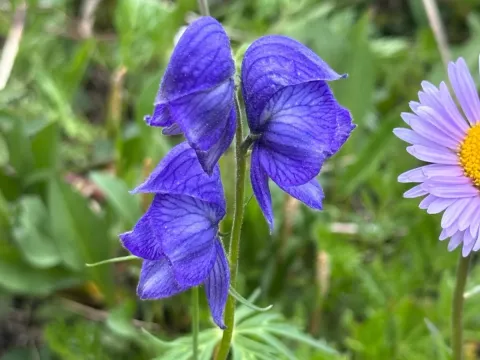
Larkspurleaf monkshood
Aconitum delphiniifolium
Larkspurleaf monkshood (Aconitum delphiniifolium) is a member of the Ranunculaceae family. It is a perennial herbaceous plant naturally occurring in the arctic and subarctic regions of North America and Asia.
What the section contains
Larkspurleaf monkshood
The crop thrives in fertile, well-drained soils. Proper drainage is the most critical factor for cultivation, as the roots are highly susceptible to rot when subjected to waterlogged conditions.
It prefers cool climates and partial shade. Excessive heat and direct sunlight during mid-summer can inhibit the growth of the plant and cause significant foliage stress.
Botanically, it is recognized by its deeply divided, larkspur-like leaves and attractive blue to violet flowers arranged in dense terminal racemes on erect stems.
In ornamental horticulture, it is prized for its cold hardiness. However, all parts of the plant are toxic, necessitating careful handling and the use of protective gear during pruning or transplanting.
Powdery mildew is a primary disease for this species, often appearing in environments with high humidity and stagnant air circulation around the foliage.
Root and crown rot are common physiological and pathological threats resulting from over-watering or soil compositions that do not facilitate adequate drainage.
Aphids can frequently infest the flower buds and young shoots, sucking sap and weakening the overall vigor of the perennial plant.
Spider mites are another frequent pest that flourishes during dry spells, leading to stippling and eventual necrosis of the leaves if left untreated.
Effective management includes maintaining proper plant spacing, ensuring good soil structure, and applying appropriate fungicidal or insecticidal treatments at the first signs of infestation.