

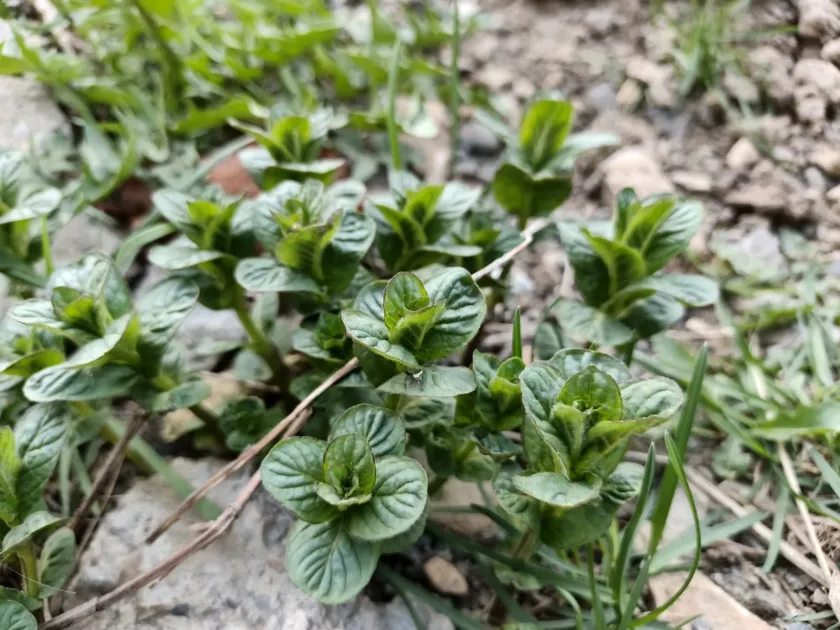
Description
Sowing dates
Peppermint is a sterile hybrid, which means it is propagated exclusively through vegetative means, primarily using rhizome cuttings or seedlings in commercial farming. Planting is typically carried out in early spring once soil temperatures reach 5–8°C, or during late summer.
The optimal planting depth for rhizomes is 8–12 cm, which ensures robust rooting while protecting the plant from desiccation. When planting seedlings, it is vital to maintain row spacing of 60–70 cm to ensure proper air circulation among the plants.
Autumn planting is feasible in regions with mild winters; however, adequate winter protection is necessary to prevent rhizome freezing. Proper timing of planting is key to establishing a strong root system before the onset of summer heat.
Plant density depends heavily on soil type and production goals, typically ranging from 40,000 to 60,000 plants per hectare. Early establishment allows the crop to form a dense canopy that effectively suppresses weed competition.
Utilizing high-quality, virus-free, and pathogen-free planting stock is the most critical factor for ensuring a healthy and productive crop during the initial years of the plantation's lifespan.
Growing requirements
Peppermint is a sun-loving crop that demands high soil fertility and consistent moisture levels. The best results are achieved on well-structured, humus-rich chernozems or loams with a neutral to slightly acidic pH.
The crop is highly sensitive to waterlogging; therefore, fields with high water tables or heavy, clay-based soils are generally unsuitable for commercial peppermint production.
The ideal temperature range for active peppermint growth is between 18–25°C. Severe moisture deficits during the peak biomass development period significantly reduce essential oil yield and overall quality.
As a member of the Lamiaceae family, the plant responds well to organic fertilizers like compost or well-rotted manure applied during soil preparation. These amendments improve soil structure and nutrient availability.
Maintaining a strict crop rotation is essential; peppermint should not be returned to the same plot for at least 4–5 years to prevent the build-up of specific soil-borne pathogens characteristic of this botanical family.
Yield
Peppermint biomass yields vary significantly depending on the growing region, climatic conditions, and the intensity of the agricultural practices used. On average, one hectare can produce between 15 and 25 tonnes of fresh green mass per season.
By harvesting twice per growing season, the total productivity of the plantation increases, though this requires supplementary mineral fertilization to restore soil nutrient levels.
Essential oil yield is the primary economic indicator for peppermint farms. Under optimal conditions, the oil content in dry raw material can reach 2–3%, making the crop highly profitable for essential oil extraction.
To achieve maximum yield potential, regular mechanical weeding and inter-row cultivation are necessary to break up soil crusting and ensure adequate root aeration.
The productive lifespan of a peppermint plantation typically lasts 3–4 years. After this period, raw material quality generally declines, and it is necessary to rotate the crop and establish a new planting area.
Main diseases and pests
Peppermint is susceptible to several severe diseases that can compromise entire plantations. Major fungal threats include anthracnose, rhizoctonia, sclerotinia, and septoria, which cause leaf spots and stem rot.
Verticillium wilt is considered a particularly dangerous pathogen as it persists in the soil for long periods, rendering the land unsuitable for mint cultivation for many years.
Rust infection can significantly diminish the quality of the raw material and reduce essential oil accumulation, necessitating immediate fungicide application upon the first signs of symptom development.
Among pests, root-knot nematodes are the most damaging to the root system, while various leaf-eating insects and aphids can cause direct damage and vector diseases such as tomato mosaic virus.
An integrated pest management (IPM) approach is recommended, focusing on the use of clean planting material, quarantine measures, and biological controls to suppress harmful organism populations.
Harvesting
Peppermint harvesting is typically performed during the peak flowering stage when the concentration of menthol and other essential oils in the leaves and flower spikes is at its highest.
Cutting should be performed in dry weather, preferably in the morning, which facilitates uniform drying and helps preserve the plant's aromatic properties and chemical integrity.
Immediately after harvest, the raw material must be processed or dried. For essential oil production, rapid distillation is essential to minimize the loss of volatile compounds.
For the production of dried medicinal herbs, forced-air dryers are used, maintaining temperatures below 40–45°C to prevent the evaporation of valuable essential oils.
Following the final harvest of the season, the plantation is often lightly cultivated or mulched to promote successful overwintering of the rhizomes and prepare the plants for the following season's growth.
In brief
14
Crop diseases
Content graph
Crop diseases · 14
Content graph
Connections · Peppermint
Most often together:
Marketplace
Products · 16

Treflan 480
Доу АгроСайенсіс С.А.С., Друзенхайм, Франція
Herbicides
3
2
·
4.1K
3 offers
9.03 €per pack
Buy


Bentagran AS
Nanjing No.1 Pesticide Factory of Red Sun Group Co., Ltd.
Herbicides
0
0
·
999
No offers
—
Details

Triflurex 240 g.e., (Trifluralin, 240 g/l)
F.A.GAN Chemical Manufacturers Ltd. Israel, member
Herbicides
0
0
·
65
No offers
—
Details


Patrick C.E.
F.A.GAN Chemical Manufacturers Ltd. Israel, member
Herbicides
0
0
·
41
No offers
—
Details
