
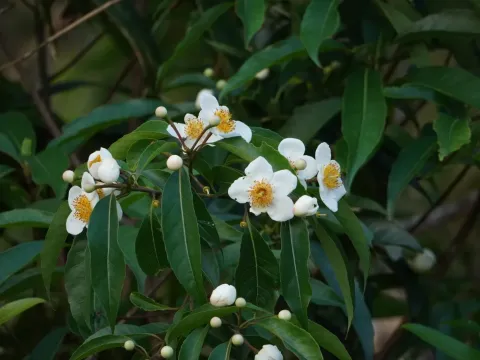
Schima wallichii
Schima wallichii
The propagation of Schima wallichii is primarily carried out through seed sowing. Planting is typically conducted in nurseries or containers during the spring season, once the danger of night frosts has passed and stable warm weather is established.
What the section contains
Schima wallichii
The seeds of this culture possess high viability; however, they require stratification to improve germination energy. The optimal sowing depth is 1–2 centimeters, which prevents desiccation and ensures uniform emergence of the seedlings.
Once seedlings emerge, it is necessary to provide partial shading, as young plants are sensitive to direct sunlight. Pricking out or transplanting seedlings should be done when they reach a height of 10–15 centimeters to strengthen the root system before final planting.
Transplanting to permanent plantations or forest areas is usually scheduled for the beginning of the rainy season. This ensures that the seedlings receive sufficient soil moisture, which is critical for the survival of young trees in their initial months.
Planting density varies based on forestry objectives. For high-quality timber production, a spacing of 3x3 or 4x4 meters is recommended, providing trees with enough space to develop a straight and strong trunk.
Schima wallichii is an evergreen tree belonging to the Theaceae family, natively found in the tropical and subtropical forests of South and Southeast Asia.
The culture prefers moist, well-drained soils with an acidic to slightly acidic reaction. It is highly sensitive to waterlogging, making sloped sites with natural drainage the most suitable environments for its growth.
The tree is demanding regarding light levels, although it can tolerate minor shading during its youth. Mature specimens require open space to achieve full growth potential and to develop a healthy, wide canopy.
Climatic preferences include high average annual temperatures and significant rainfall. In regions with a pronounced dry season, the crop requires supplemental irrigation to maintain steady growth rates.
- Optimal temperatures: 18 to 28 degrees Celsius.
- Soil type: Loam and organic-rich forest soils.
- Altitudinal range: 500 to 2500 meters above sea level.
The economic value of Schima wallichii lies in its high-quality timber, which is known for its durability, strength, and natural resistance to rot and decay.
Technical maturity of the wood is generally reached after 25–40 years of active growth. During this period, the tree achieves substantial dimensions, yielding high-grade commercial lumber for various industrial applications.
Beyond timber, the plant is used for reforestation and the restoration of degraded lands, thanks to its extensive root system that effectively binds soil and prevents erosion.
The bark and leaves contain specific bioactive compounds, allowing the culture to be integrated into agroforestry systems as a protective component for soil health.
Economic efficiency depends heavily on adherence to management practices, such as regular thinning and sanitary pruning, which prevent overcrowding and enhance the quality of the harvested timber.
Major threats to this culture include fungal infections, which often emerge when humidity levels are poorly managed or when there is stagnant air within the forest stand.
Pests, such as leaf-eating insects and wood-boring beetles, can cause significant damage to young plantations, slowing down their growth and reducing the overall vigor of the stand.
To prevent the spread of diseases, it is essential to follow strict sanitary protocols, timely removing infected parts and ensuring adequate air circulation between individual trees.
Root rot remains the most dangerous ailment, commonly developing in waterlogged areas with heavy soil, which can lead to the premature death of mature specimens.
Monitoring the health of plantations is recommended at least twice a year, allowing for the early detection of infestation sites and the timely application of necessary protective agrotechnical measures.