
Mountain stewartia
Stewartia ovata
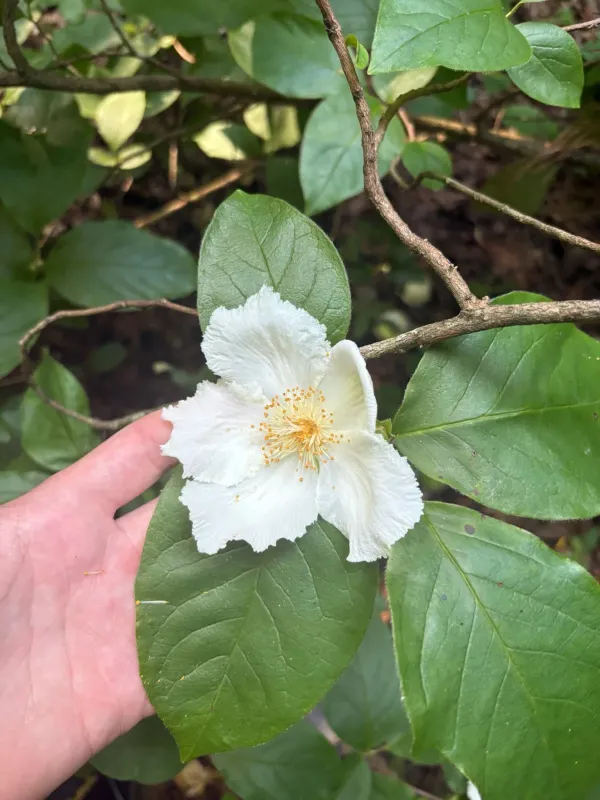
Description
Growing requirements
Mountain stewartia (Stewartia ovata) is a deciduous flowering shrub or small tree belonging to the Theaceae family. It is native to the southeastern United States, typically found in moist, deciduous forests and sheltered ravines.
The plant thrives in sites that provide dappled shade, as it is sensitive to intense afternoon heat. Exposure to excessive direct sunlight can scorch the foliage and hinder the overall vigor of the specimen.
The soil requirements are specific: Stewartia ovata necessitates well-drained, acidic, and organic-rich soil. It will not tolerate waterlogged conditions or heavy clay soils that impede root respiration.
Moisture management is key to successful cultivation. Consistent watering is essential, especially during the first few years of establishment. Applying organic mulch, such as pine needles or wood chips, helps maintain soil moisture and regulates temperature.
While relatively hardy, the plant benefits from protection against harsh winter winds. Proper site selection, away from drafts and exposed areas, significantly contributes to the longevity and health of the shrub.
Main diseases and pests
Mountain stewartia is generally considered a low-maintenance plant with few major pest or disease issues. However, poor drainage remains the most significant threat, often leading to root rot and eventual decline.
Leaf spot diseases may occur in particularly wet seasons or areas with poor air circulation. These infections usually manifest as dark lesions on the foliage but rarely kill established, healthy plants.
Pests such as aphids or spider mites may sporadically infest the leaves during periods of drought or high heat stress. Regular monitoring of the underside of the leaves is advised during these periods.
To prevent disease, it is essential to ensure that the area around the shrub is kept free of debris. Pruning out crossing or dead branches improves airflow and helps keep the plant canopy healthy and robust.
If chemical intervention becomes necessary, use caution. The plant's foliage can be sensitive to certain pesticides, so localized treatment on infected areas is generally preferred over broad-spectrum spraying.