
Schima khasiana
Schima khasiana
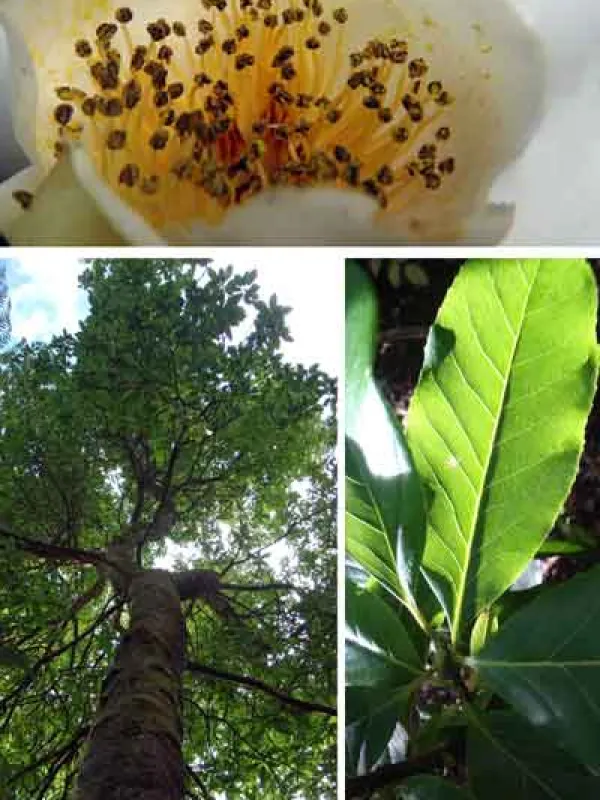
Description
Growing requirements
Schima khasiana is an evergreen tree belonging to the Theaceae family. In its natural environment, the plant can reach significant heights, forming a dense canopy and a sturdy trunk, making it a key component of mountain forest ecosystems.
The native distribution area covers the high-altitude regions of Northeast India, specifically the Khasi Hills, as well as parts of Southeast Asia. The plant is well-adapted to subtropical mountain climates with high rainfall patterns.
For successful cultivation, the species requires well-drained, acidic soils rich in organic matter. It prefers locations with high atmospheric humidity and protection from drying winds.
Optimal growth conditions for Schima include a temperate subtropical range, as the plant is sensitive to both extreme heat and severe frosts. It shows specific requirements for substrate quality during the initial stages of seedling development.
The economic use of Schima is primarily focused on forestry and landscaping. The timber exhibits favorable physical and mechanical properties, making it suitable for construction and carpentry purposes.
Main diseases and pests
Typical threats to the development of this species include fungal root diseases, often occurring due to waterlogging of the soil and insufficient aeration.
In its natural habitat, the tree may suffer from various insect pests that damage young foliage and tender shoots during the active growing season.
Disruption of humidity levels often leads to a weakened immune system in the plant, making it more susceptible to secondary infections and bacterial diseases.
Competition with fast-growing invasive species in forest stands remains a significant limiting factor for the survival of young Schima saplings.
To prevent potential infections, it is essential to conduct regular monitoring of the plantations and maintain the necessary soil pH levels.