
Schima bancana
Schima bancana
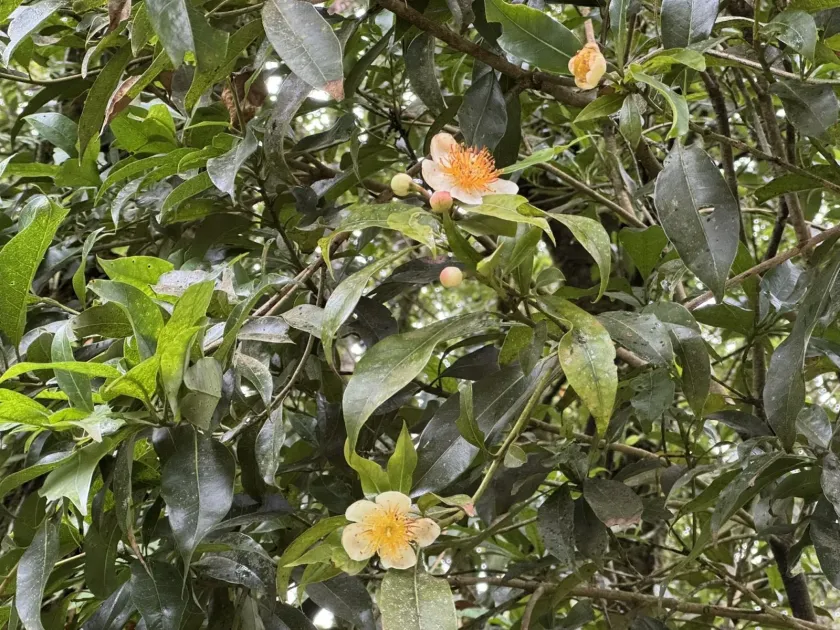
Description
Sowing dates
Propagation of Schima bancana is primarily conducted through seeds within specialized nursery environments. It is vital to maintain seed hydration post-harvest to preserve their viability for successful germination.
Sowing should be performed in well-drained, nutrient-rich media. Consistent temperature regulation, ideally between 25 and 30 degrees Celsius, is necessary to promote uniform and rapid seedling emergence.
Transplanting seedlings to their final location is most effective at the onset of the rainy season. This timing ensures that young plants receive the moisture required to establish their root systems.
Initial protection from direct sunlight is crucial during the first year of growth. Gradual exposure to full light helps to acclimate the saplings and strengthens the stem structure.
Planting density is determined by the intended land use, whether for timber production or reforestation. Proper spacing prevents resource competition and promotes straight, healthy vertical growth.
Growing requirements
Schima bancana is a member of the Theaceae family, native to the humid tropical forests of Southeast Asia. It thrives in climates characterized by abundant and consistent annual rainfall.
The species prefers well-drained loamy soils, as it is highly susceptible to root damage in waterlogged conditions. Acidic to neutral soil pH levels are generally considered ideal for optimal growth.
A stable temperature range is required, as the plant is not adapted to significant seasonal fluctuations. High atmospheric humidity also plays a vital role in maintaining the health of the canopy.
The tree requires significant sunlight to reach its full potential, though it may tolerate moderate shade during its juvenile stages. Proper site selection involves areas protected from severe winds.
Soil management should include maintaining organic matter levels. Excessive lime or alkalinity in the substrate can hinder nutrient uptake, often leading to visible signs of stress in foliage.
Yield
The primary economic value of Schima bancana lies in its high-quality, durable timber. It is highly sought after for various construction purposes due to its structural integrity and strength.
In plantation settings, yield is significantly influenced by early silvicultural practices. Well-tended trees produce straight, uniform trunks that are easier to harvest and process for industry.
The tree also serves as a valuable component in ecological restoration projects. Its rapid canopy formation makes it an excellent choice for stabilizing soil and restoring biodiversity.
Seed production is moderate, and harvesting must be timed carefully. Fruits are typically woody capsules that release seeds upon drying, necessitating precise timing for collection.
Research continues into the potential applications of the tree’s extracts. While timber is the main product, future research may identify uses for its biochemical components in other sectors.
Main diseases and pests
The primary threats to the species include fungal pathogens, particularly root rots that proliferate in overly moist soil conditions. These are most destructive to younger saplings.
Insect pests, including defoliators, can pose a risk by reducing the plant's ability to perform photosynthesis. Integrated pest management strategies are recommended for plantation health.
Soil erosion on slopes can expose roots, making them susceptible to physical damage and secondary infections. Soil conservation measures are essential for long-term tree health.
Weed competition is a major challenge during the early years of tree development. Consistent maintenance of the planting area is required to prevent suppression by invasive plant species.
- Root rot pathogens (e.g., Phytophthora)
- Defoliating insect species
- Waterlogging stress
- Invasive weed competition