
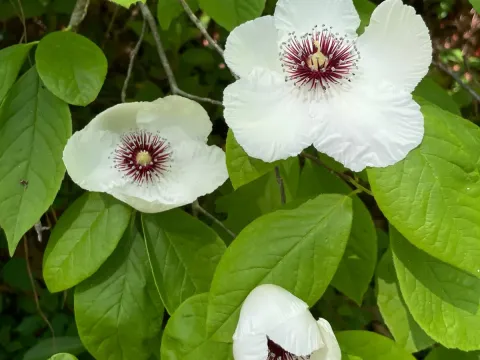
Silky Stewartia
Stewartia malacodendron
Silky Stewartia (Stewartia malacodendron) is a deciduous shrub or small tree belonging to the Theaceae family. Native to the southeastern United States, it is highly prized for its large, white, camellia-like flowers featuring striking purple stamens.
What the section contains
Silky Stewartia
This species is valued in ornamental horticulture for its unique aesthetic, specifically the delicate bark and showy blooms that appear in late spring and early summer. It is considered a rare find in many commercial nurseries.
The plant thrives best in a location with dappled shade, protecting it from harsh, direct sunlight. In its natural habitat, it grows in the understory, suggesting that it prefers sheltered positions in a home garden.
Soil conditions are critical for this species; it requires moist, acidic, and well-draining soil. It is intolerant of heavy, compacted, or alkaline soils, which often lead to poor vigor and nutrient deficiency issues.
Maintaining consistent soil moisture is essential for success. Using an organic mulch layer helps retain soil moisture, suppresses weeds, and keeps the roots cool during the intense summer heat.
Silky Stewartia is generally resistant to many pests and diseases, provided it is grown in the correct environment. Poor drainage is the most significant threat, as it predisposes the root system to rot.
Fungal infections can occur if airflow is poor around the foliage. It is important to ensure enough space between plants and avoid overhead watering to keep the leaves dry and healthy throughout the season.
Occasionally, minor infestations of aphids or lace bugs may occur. These pests are usually managed through natural predators or gentle horticultural soaps if the population reaches a damaging threshold.
Chlorosis is a common physiological issue occurring in soils with an improper pH level. Regular soil testing is recommended to ensure that the environment remains acidic enough for optimal nutrient uptake.
Winter injury can occur in colder climates, particularly on young branches. Providing a windbreak or protective cover during severe freezes ensures that the plant remains healthy for the following growing season.