
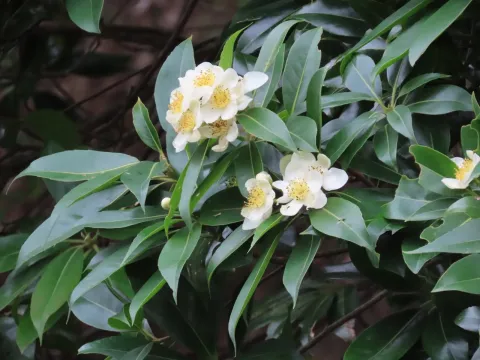
Schima superba
Schima superba
Schima superba is an evergreen tree belonging to the Theaceae family, known for its elegant canopy and sturdy growth habit. It is a significant species in the subtropical forests of Southeast Asia and Southern China.
What the section contains
Schima superba
The tree thrives in warm, humid climates characterized by high annual precipitation. It is typically found at altitudes ranging from 200 to 1,500 meters, where the temperature remains favorable for consistent year-round biological activity.
Soil requirements for Schima superba involve deep, well-drained, and slightly acidic substrates. The species is sensitive to waterlogged conditions, making proper soil drainage a vital prerequisite for any planting site.
In terms of light exposure, young seedlings prefer partial shade to establish, while mature trees exhibit high light requirements for optimal photosynthesis and canopy development. This natural succession pattern is crucial for forestry management.
The cultivation process requires attention to weed control during the establishment phase. Once the root system is well-developed, Schima superba becomes a hardy species capable of rapid growth and high biomass accumulation.
The primary economic value of Schima superba lies in its timber production. The wood is highly regarded for its strength, density, and natural resistance to decay, making it suitable for high-quality construction and furniture.
Beyond its timber, the tree is widely utilized in urban forestry and landscaping. Its glossy, evergreen foliage and attractive, fragrant flowers enhance the aesthetic appeal of public parks, gardens, and botanical reserves.
Schima superba is an excellent candidate for slope stabilization and erosion control projects. Its robust, penetrating root architecture helps anchor soil on steep terrains, preventing landslides and protecting watersheds.
In forest management, the species acts as a soil improver. The leaf litter generated by the tree decomposes effectively, enriching the soil with essential organic matter and supporting the growth of understory flora.
Sustainable harvesting of Schima superba requires a long-term strategy, usually spanning several decades. Periodic thinning allows remaining trees to gain maximum girth, ensuring a high-quality yield for future timber demand.
The main threats to Schima superba involve fungal diseases, which often manifest as root rot or leaf spots under conditions of poor ventilation or excess soil moisture. Maintaining dry crown environments is essential for disease prevention.
Pest management is focused on controlling defoliating insects that can reduce the tree's vigor. Regular inspection of plantations ensures that any infestation is detected early and contained before significant economic damage occurs.
Adequate planting density is a key preventive measure against the rapid spread of pathogens. By allowing sufficient space between individual trees, the risk of cross-contamination by spores or insects is significantly reduced.
Integrated Pest Management (IPM) practices, including the use of biological control agents, are recommended for maintaining healthy plantations. Avoiding heavy use of synthetic pesticides helps protect the surrounding forest biodiversity.
Environmental stressors such as prolonged droughts or extreme heat waves can weaken tree immunity, leaving them susceptible to secondary infections. Providing auxiliary irrigation during critical development stages is a beneficial practice for nursery management.