
Snow Camellia
Camellia rusticana
Description
Growing requirements
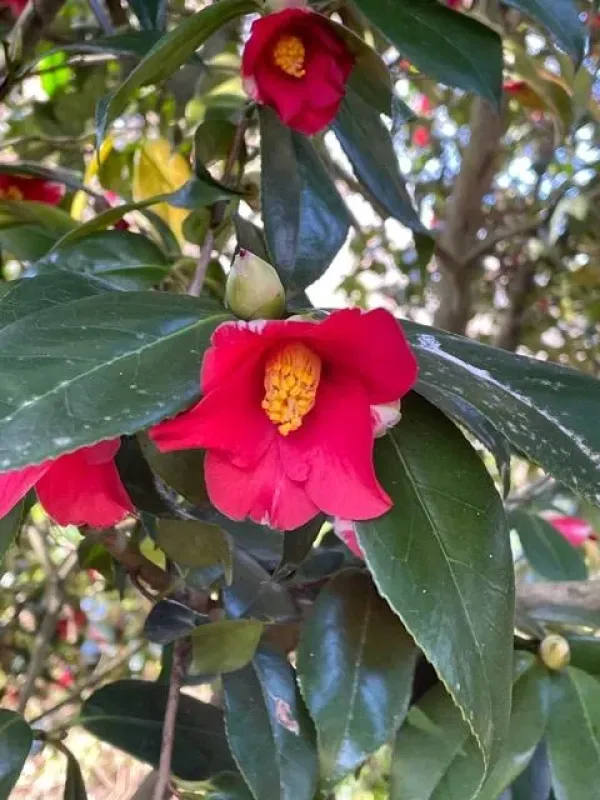
Snow Camellia (Camellia rusticana) belongs to the Theaceae family and is an endemic species native to the mountainous regions of Japan. The plant derives its specific name from its natural habitat, which is characterized by heavy snowfall in winter.
Botanically, it is an evergreen shrub known for its remarkable cold hardiness compared to other species in the genus. The foliage is leathery, dark green, and glossy, making the plant highly sought after for decorative landscaping purposes.
For successful cultivation, it is essential to provide acidic soil with a pH ranging between 5.0 and 6.0, rich in organic matter. The species thrives in partial shade, as direct exposure to harsh midday sunlight often causes leaf scorch.
Moisture regulation is critical; while the plant requires consistent humidity in both the substrate and the air, stagnant water around the roots can be lethal. In regions with severe winters, applying a layer of mulch around the base is vital to protect the root zone from deep frost.
Standard horticultural practices involve fertilizing with specialized products for acid-loving plants during the active growing season. Pruning should be carried out immediately after flowering to shape the canopy and encourage the development of new flower buds for the following year.
Main diseases and pests
The most common pests affecting Camellia rusticana include scale insects and mealybugs, which feed on the sap of the leaves. Management involves the use of systemic insecticides or neem oil applications upon the first sign of an infestation.
Root rot, particularly caused by Phytophthora, is a primary threat occurring due to excessive watering or poorly draining soil conditions. Prevention focuses on ensuring adequate soil porosity and strict adherence to irrigation schedules.
Anthracnose and leaf spot diseases may appear when air humidity is consistently high and airflow is restricted. Implementing chemical control with copper-based or systemic fungicides during active growth phases helps maintain plant health.
Leaf chlorosis is frequently observed as a result of improper soil pH levels or iron deficiency. Addressing this requires adjusting the substrate acidity and applying iron in a chelated form to ensure optimal nutrient uptake by the roots.
Good sanitation practices, such as the prompt removal of dead or damaged branches, are essential to reduce the inoculum pressure of fungal pathogens within the garden or nursery environment.