
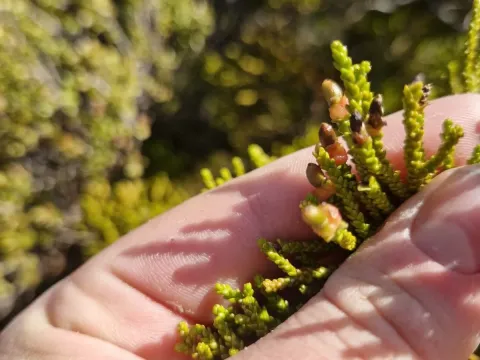
Dacrydium intermedium
Dacrydium intermedium Kirk
Dacrydium intermedium, commonly known as yellow pine, belongs to the Podocarpaceae family. It is a slow-growing coniferous species native to the higher altitudes and wetlands of New Zealand.
What the section contains
Dacrydium intermedium
The species requires specific ecological conditions characterized by high rainfall and high humidity. It thrives in acidic, well-drained, organic-rich soils that are typical of sub-alpine forests and scrublands.
Botanic features include distinct morphological transitions; the foliage changes significantly from juvenile needle-like leaves to mature scale-like leaves. This developmental strategy is an adaptation to fluctuating environmental conditions.
In terms of cultivation, the species is notoriously difficult to propagate outside its native range. It demands a stable microclimate, cool root temperatures, and high air moisture to thrive in nursery settings.
Historically, the timber was highly valued for its durability and aesthetic properties in cabinet making. Currently, its primary importance lies in ecosystem restoration and the study of endemic gymnosperm biology.
The species is vulnerable to soil-borne pathogens, particularly root rot, which occurs in stagnant or poorly aerated soil conditions. Regular monitoring of drainage quality is essential to prevent fungal outbreaks.
Pests such as scale insects and spider mites can infest the foliage, particularly under stress caused by improper humidity levels. Integrated pest management protocols are recommended to maintain plant vitality in controlled environments.