
Fiji Yew
Retrophyllum vitiense
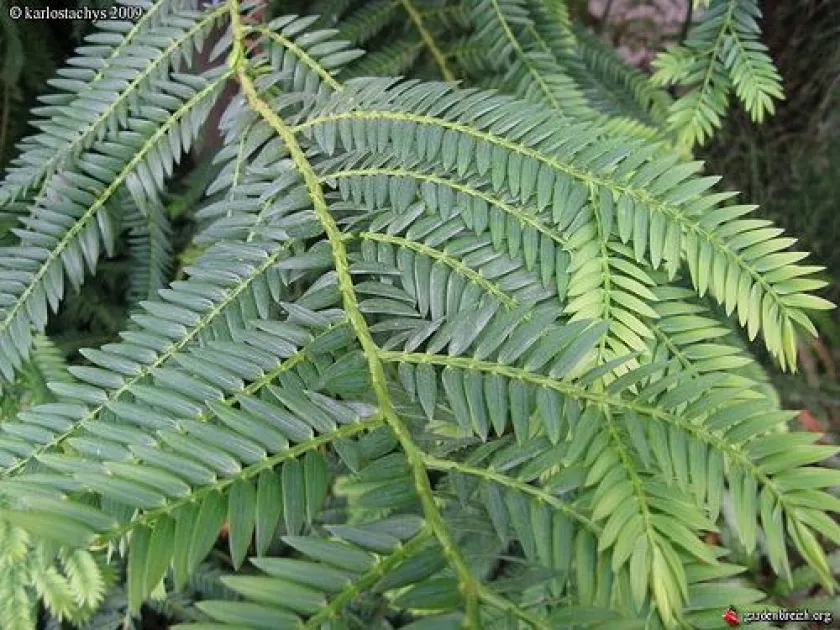
Description
Growing requirements
The Fiji Yew (Retrophyllum vitiense) belongs to the Podocarpaceae family. It is a large, evergreen conifer characterized by its dense foliage and significant timber production potential in tropical regions.
This species is native to the Pacific islands, including Fiji and the Solomon Islands. It thrives in humid tropical forest ecosystems where consistent moisture and warmth allow for steady, albeit slow, growth.
For optimal growth, the species requires well-drained soils rich in organic matter. Waterlogging is detrimental to the root system, so proper soil structure and drainage are vital for successful establishment.
The climate requirements include high annual precipitation and protection from cold winds. The plant is not frost-tolerant and requires stable, warm temperatures throughout the year to maintain physiological activity.
Agronomic management involves nursery care, where seedlings are provided with partial shade to mimic the canopy environment of their natural habitat, ensuring better survival rates before field transplantation.
Harvesting
The primary economic use of Retrophyllum vitiense is its high-quality timber. The wood is esteemed for its uniform texture, workability, and durability, making it ideal for fine woodworking and cabinetry.
Harvesting is carried out following sustainable forestry standards. Given the slow growth rate of the species, long-term rotation cycles are necessary to ensure the continuous availability of the resource.
Beyond its timber value, the tree is often used in reforestation and conservation projects aimed at restoring native Pacific forest landscapes and protecting soil stability on hillsides.
Harvesting techniques involve precision logging to prevent damage to surrounding vegetation. This selective approach is crucial for maintaining the ecological balance of the plantation area.
The tree remains an important species for niche markets, where the demand for exotic and sustainable hardwoods drives the need for improved silvicultural practices and plantation management.