
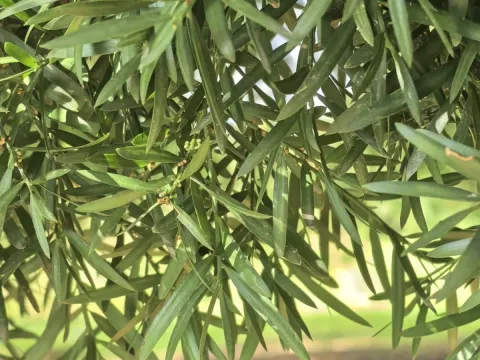
Afrocarpus
Afrocarpus (J. Buchholz & N. E. Gray) C. N. Page
Propagation of Afrocarpus is primarily conducted through seeds or cuttings. Seeds require a period of stratification to improve germination rates, which typically lasts from one to three months under controlled humidity conditions.
What the section contains


Afrocarpus
Sowing should be performed in a loose substrate composed of peat and sand, ensuring a steady temperature of approximately 20–22 degrees Celsius. It is crucial to maintain moderate soil moisture while avoiding waterlogging, which can cause seed decay.
Cuttings are taken in late summer or early autumn using semi-hardwood shoots. Cuttings are treated with rooting hormones and placed in greenhouse conditions with high atmospheric humidity to stimulate root development.
Transplanting young plants into open ground should only occur after the seedlings have reached a sufficient size and developed a robust root system capable of withstanding environmental temperature fluctuations.
The optimal time for transplanting to a permanent location is the spring period, after the danger of night frosts has passed, allowing the crop to adapt before the onset of summer heat.
Afrocarpus belongs to the family Podocarpaceae and is an evergreen tree native to African regions. In its natural habitat, the crop grows in mountain forests, requiring high levels of air humidity to thrive.
The plant prefers well-drained, fertile loamy soils with a neutral or slightly acidic pH. Providing high-quality drainage is essential, as water stagnation in the root zone is detrimental to this species.
Regarding light exposure, Afrocarpus is relatively tolerant; young plants benefit from partial shade, while mature specimens can successfully develop in open areas with diffused sunlight.
The culture is sensitive to extreme temperatures; the optimal range for active growth is 15–25 degrees. Protection is required during freezing temperatures, as the plant is not fully frost-hardy.
In regions with arid climates, agronomic practices must include regular crown misting, which helps maintain the aesthetic quality of the needles and serves as a preventative measure against spider mites.
Economic use of Afrocarpus is centered on the production of valuable timber, highly prized for its strength, uniform texture, and resistance to biological decay.
In forestry, this crop is valued for its relatively fast growth rate in favorable conditions compared to other conifer species. Biomass growth rates are directly tied to forest management quality and rainfall regularity.
Beyond timber production, the species is widely used in decorative gardening and landscape architecture for creating hedges or topiary forms.
On an industrial scale, plantation productivity is measured by the volume of high-quality wood suitable for joinery and high-end furniture manufacturing.
Seed yield is limited as fruiting begins only at a mature age, so agricultural efforts focus primarily on nursery production for landscaping and reforestation needs.
The primary threat to Afrocarpus consists of fungal root diseases, often stemming from poor watering practices and soil over-saturation.
Among pests, scale insects and mealybugs cause the most significant damage, settling in the needle axils and sapping the tree's vitality, which stunts overall development.
Spider mites become a serious problem in low-humidity conditions, causing yellowing and premature needle drop, which drastically reduces the plant's aesthetic and biological value.
To prevent infestations, regular inspection of the underside of branches is recommended, along with the application of systemic insecticides upon the detection of initial infection spots.
- Maintaining adequate spacing during planting to ensure crown ventilation.
- Regular removal of dead or damaged branches.
- Monitoring soil acidity levels to prevent chlorosis.