
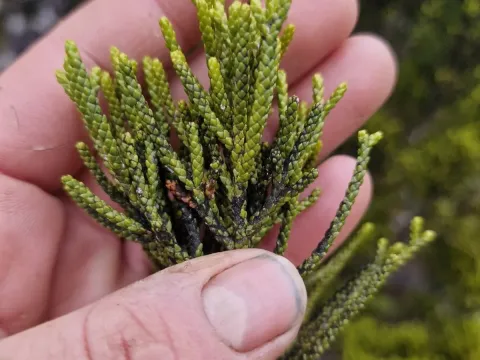
Halocarpus biformis
Halocarpus biformis
Halocarpus biformis, commonly known as the pink pine, belongs to the Podocarpaceae family. It is a slow-growing, evergreen conifer endemic to the mountainous regions of New Zealand, known for its extreme resilience to challenging environmental conditions.
What the section contains
Halocarpus biformis
The species thrives in well-drained, acidic soils typically found in subalpine ecosystems. It requires consistent high atmospheric humidity and cool temperatures to maintain its metabolic functions, making it a specialized plant for specific climatic zones.
A striking botanical feature is its heterophylly, where the tree displays different leaf forms during its life cycle. Young plants develop needle-like leaves, while mature trees transition to scale-like leaves that press closely against the branchlets for protection.
In terms of cultivation, the tree demands stable moisture levels in the root zone. However, it cannot withstand waterlogged conditions, which lead to root asphyxiation. Providing a substrate with excellent aeration is essential for successful growth in nursery or forest settings.
Historically, its wood has been highly valued for its density and natural resistance to rot. These physical properties make it a subject of interest for sustainable forestry, although its slow growth rate necessitates long-term planning for any industrial applications.
Fungal root diseases are the primary threats to Halocarpus biformis, especially in cultivation environments where drainage is poorly managed. Pathogens often thrive in saturated soils, leading to rapid decay of the root system and subsequent tree decline.
Introduced browsing mammals, such as deer, present a significant risk to the regeneration of wild populations. By consuming apical shoots and bark, these animals can severely stunt the growth of young trees and prevent the development of forest canopy.
Pest infestations, particularly by native wood-boring insects or needle-chewing larvae, can weaken the overall health of the tree. Regular inspections are required to detect and mitigate potential outbreaks before they cause irreversible damage to the canopy.
Climate change poses a long-term risk to this species, as it is highly sensitive to shifts in precipitation patterns and temperature regimes. Protecting the natural habitat is essential to ensuring the survival of the species in the face of warming trends.
Management strategies should focus on maintaining healthy soil conditions, preventing water stagnation, and implementing site-specific protection against invasive wildlife. Integrated pest management remains the most effective approach for ensuring the vitality of these trees.