
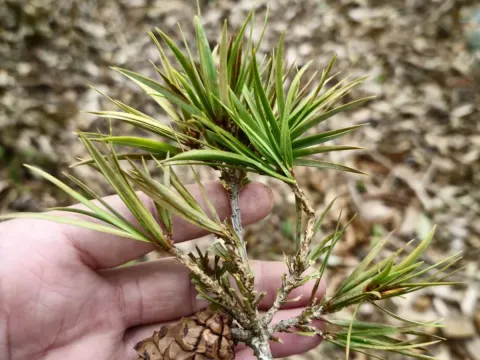
Krempf's pine
Pinus krempfii
Krempf's pine (Pinus krempfii) is a rare and distinct coniferous species belonging to the Pinaceae family. It is endemic to the high-altitude regions of Vietnam, thriving specifically in the moist, cool conditions of mountain forests at elevations between 1200 and 2000 meters.
What the section contains
Krempf's pine
The species is botanically remarkable for its flattened, leaf-like needles, which is an evolutionary anomaly compared to the typical cylindrical needles found in most pine species. Mature specimens can grow up to 30 meters tall, forming a wide and robust crown.
The climate requirements are stringent: the tree needs high atmospheric humidity and a moderate temperature range throughout the year. It does not tolerate prolonged drought or the excessive heat typical of low-lying agricultural zones.
In terms of soil, it requires well-drained, slightly acidic, and organic-rich substrates. Proper agricultural management focuses on maintaining consistent moisture levels while preventing waterlogging, which is detrimental to the tree's health and root development.
Host-plant utilization is limited mainly to botanical gardens and research facilities due to its rarity and protected status. The plant is not cultivated for timber or industrial forestry, as conservation efforts take precedence over any economic exploitation.
The primary threats to Krempf's pine involve habitat loss due to deforestation and significant shifts in regional climate patterns. The fragmented distribution of its natural population makes it highly vulnerable to extinction.
When grown in nursery or controlled settings, root rot caused by fungal pathogens is a major concern. This often arises from poor drainage or excessive soil moisture, requiring careful attention to irrigation management.
Typical conifer pests, such as aphids and bark beetles, can cause significant damage to weakened trees. Routine phytosanitary checks and early detection of infestations are essential protocols for the successful maintenance of this pine.
In its native environment, the species struggles against aggressive invasive plants that compete for light and nutrients. Conservationists are working to mitigate these threats by protecting existing stands and studying propagation methods.
Maintaining optimal ecological conditions is crucial, as the pine possesses low adaptive plasticity to environments that differ significantly from its home range. Preventive care remains the most effective tool in managing this rare species.