
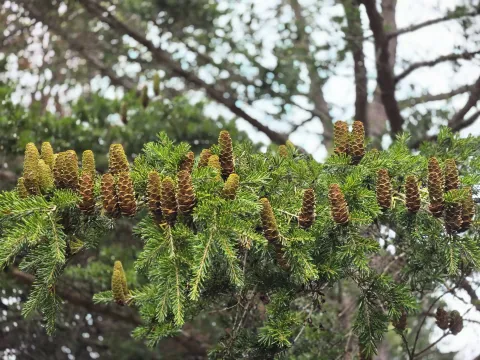
Keteleeria
Keteleeria
Propagating Keteleeria is primarily achieved through seeds, which require specific conditions to ensure successful germination. Seeds are typically harvested from mature cones and require thorough cleaning before planting.
What the section contains


Keteleeria
Stratification is a critical step for Keteleeria seeds, involving cold storage for several weeks to break dormancy. This process significantly improves the uniformity of germination when seeds are moved to warmer environments.
Sowing should take place in a well-drained, nutrient-rich sterile medium in containers. Consistent moisture levels are vital, but practitioners must ensure the medium does not become waterlogged to prevent rot.
Seedlings show slow initial growth, which necessitates careful monitoring in a nursery setting for the first two to three years. Providing partial shade during the first growing season helps prevent sunscald.
Transplanting to the final site should be timed with the period of dormancy. Care must be taken to minimize root disturbance to ensure the young tree establishes itself effectively in the new substrate.
Keteleeria is a genus of evergreen trees belonging to the Pinaceae family. These trees are known for their distinct, flat, needle-like leaves and large, upright cones, which set them apart from other conifers.
The natural habitat of these trees is found in the mountainous subtropical regions of East Asia. They thrive in climates that offer moderate rainfall and protection from harsh, drying winds throughout the year.
Regarding soil requirements, Keteleeria prefers deep, well-draining soils with a slightly acidic to neutral pH. They are not tolerant of heavy, waterlogged clays which restrict oxygen access to the root zone.
This species is moderately light-demanding. While mature trees prefer full sun to maintain a healthy crown, younger saplings often benefit from the protection provided by the canopy of other trees.
The temperature range for successful growth is quite specific, as the species is not frost-hardy. Consistent, warm subtropical conditions are essential for optimal wood development and overall tree health.
Root rot, often caused by species of Phytophthora, remains the most significant threat to Keteleeria plantations. Proper site selection and drainage management are the best preventative measures against these pathogens.
Defoliating insects can occasionally attack the foliage, leading to reduced photosynthetic capacity. Monitoring programs are essential to detect infestations before they reach levels that require chemical control.
Fungal leaf diseases may occur in high humidity or stagnant air conditions. Improving airflow through regular thinning or pruning can reduce the prevalence of these fungal outbreaks significantly.
Bark damage caused by wildlife or human activity can open entry points for opportunistic wood-decay fungi. Protecting young trees with guards or fencing is a common practice in modern silviculture.
Integrated Pest Management (IPM) strategies are highly recommended to balance the health of the Keteleeria trees with ecological considerations, ensuring the longevity and productivity of the forest stand.