
Lacebark pine
Pinus bungeana
Description
Growing requirements
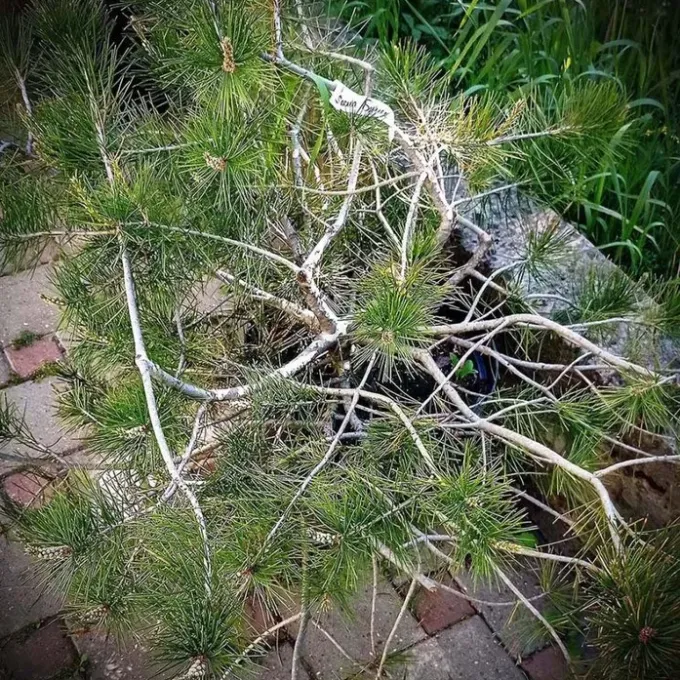
The Lacebark pine (Pinus bungeana) belongs to the Pinaceae family. It is a unique conifer species native to the mountain regions of China.
The plant prefers sunny locations with good light exposure. While young trees are sensitive to severe frost, mature specimens show moderate winter hardiness.
The tree has moderate soil requirements. It thrives best in well-drained, sandy loam or loamy soils with a neutral or slightly acidic pH balance.
A crucial requirement is avoiding water stagnation in the root zone. Lacebark pine is highly drought-tolerant, making it suitable for landscaping in regions with hot summers.
The species is characterized by a slow growth rate, which adds to its value in horticultural design and the creation of exclusive landscape compositions.
Yield
In an agricultural context, Lacebark pine is valued as a highly decorative specimen rather than a forestry product. Its yield is measured by its aesthetic appeal and longevity.
The tree is famous for its unique mottled bark that peels off as it matures, revealing light patches, which is a key indicator of the plant's quality and ornamental value.
Pine cones can be harvested to collect seeds for propagation in nurseries, a process that requires strict adherence to stratification protocols.
The species is frequently used in specimen planting, where a single mature tree acts as a landscape centerpiece due to its distinct visual characteristics.
Industrial timber value is minimal due to the rarity of the species and its protected status in many areas, so the focus remains on the preservation of live specimens.
Main diseases and pests
The primary threats to Lacebark pine include fungal diseases such as needle rust, especially in conditions of high humidity and poor crown ventilation.
Trees can be affected by woolly adelgids and other sap-sucking pests that weaken the foliage's immune system and promote secondary infections.
Young saplings require protection against rodents and winter collar rot, which is a critical factor during the first years of growth in open ground.
Improper irrigation, leading to soil waterlogging, inevitably leads to the development of root rot, which is notoriously difficult to treat.
Effective prevention includes timely sanitary pruning of dead branches and the application of systemic fungicides during the active growing season.