
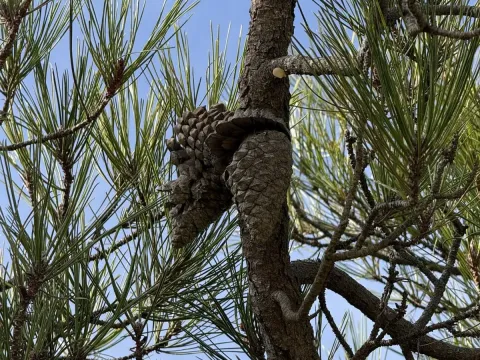
Knobcone pine
Pinus attenuata
Knobcone pine, scientifically known as Pinus attenuata, belongs to the Pinaceae family and is native to the coastal regions of Oregon and California. This species is world-renowned for its remarkable adaptation to wildfire-prone environments, displaying a unique life cycle strategy.
What the section contains
Knobcone pine
The tree exhibits moderate growth rates and typically reaches heights between 10 and 25 meters. Its needles are fascicled in groups of three, and the tree is distinguished by its heavy, asymmetrical cones that remain closed and attached to the branches for many years.
In terms of soil requirements, the species is highly undemanding but requires exceptional drainage. It thrives in nutrient-poor, rocky, or gravelly soils where competitive plant species struggle to establish, making it an excellent choice for reclamation projects on difficult sites.
Climate preferences for the Knobcone pine include mild winters and dry summers. While it can handle some drought, it is not tolerant of long-term high humidity or severe, prolonged frost, which can cause significant damage to the crown and leading shoots.
When selecting a site for cultivation, full sun exposure is a mandatory requirement. Providing ample space is also necessary, as the tree develops a wide root system that does not compete well with shallow-rooted ground covers or aggressive shrubs.
Western gall rust is a notable fungal pathogen that causes tumor-like swellings on the branches and main stem. If left untreated, these galls can girdle the branch, leading to the necrosis of distal parts of the tree and structural weakness.
Bark beetles represent the most severe insect threat to mature trees. These pests bore into the cambium layer, effectively cutting off nutrient and water transport, which often results in the rapid death of the entire tree within a single season.
Environmental stress, such as prolonged soil waterlogging, significantly increases susceptibility to root pathogens like Phytophthora. Improving site drainage is the primary defense strategy against these soil-borne threats during the planting phase.
Preventive maintenance involves pruning dead or dying branches during the dormant season to reduce the habitats available for wood-boring insects. Ensuring the trees are well-spaced prevents the rapid spread of localized fungal outbreaks.
Integrated pest management strategies for the Knobcone pine prioritize tree health and vigor through correct site selection. Chemical control methods should be reserved for severe infestations and applied strictly according to regional safety guidelines.