
Holford Pine
Pinus holfordiana
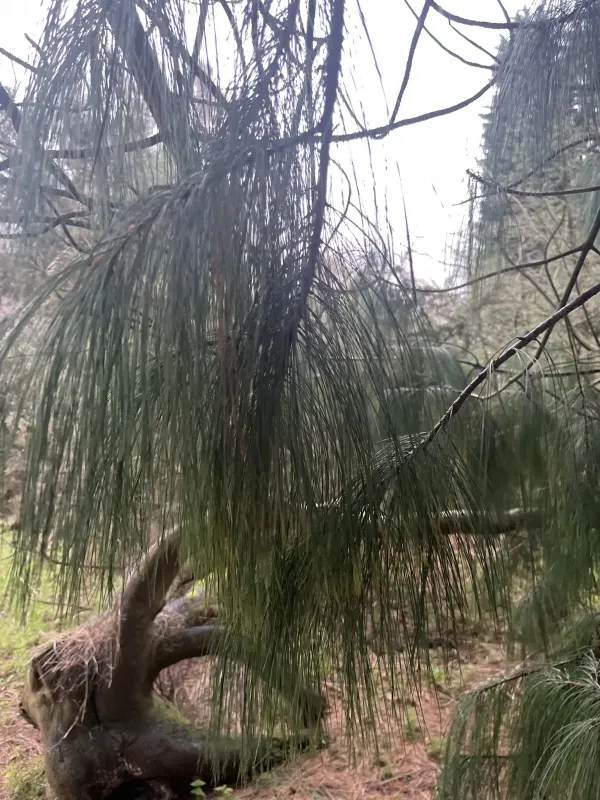
Description
Growing requirements
The Holford Pine (Pinus holfordiana) is a distinctive hybrid conifer belonging to the Pinaceae family. It is recognized as a cross between the Eastern White Pine (P. strobus) and the Himalayan Pine (P. wallichiana).
This species requires deep, well-draining soil to thrive. It performs best in slightly acidic to neutral soil conditions, avoiding heavy clay substrates that may lead to poor aeration around the roots.
Light requirements for this pine are quite high; it prefers full sun exposure to maintain its dense foliage color and symmetrical shape. Partial shade may be tolerated but often results in sparser growth.
Climatic adaptability includes a moderate tolerance to cold, although it appreciates shelter from strong, desiccation-causing winds. In regions with harsh winters, young specimens often require frost protection.
Agrotechnical maintenance involves regular mulching to keep the soil moisture consistent and suppress weed competition. Mulch should be applied carefully, leaving a small gap around the trunk to prevent decay.
Main diseases and pests
Holford Pines are susceptible to various fungal pathogens, most notably needle cast diseases. These often manifest in humid conditions where air circulation within the canopy is insufficient.
Pests such as aphids and scale insects are common threats to this species. Infestations can lead to yellowing needles and stunted terminal growth, requiring timely insecticide intervention.
Root rot caused by Phytophthora is a major risk in waterlogged soil. Ensuring adequate landscape drainage is the most effective preventative measure against such soil-borne pathogens.
Bark beetles can be a severe problem, particularly in drought-stressed trees. Maintaining tree vigor through proper watering is essential for natural defense against wood-boring insects.
Sanitation practices, including the removal of dead or infected branches, are necessary to prevent the spread of diseases. Pruning should ideally be done during the dormant season.