
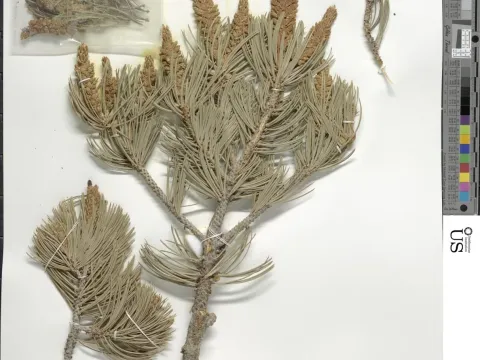
Johann's Pine
Pinus johannis
Johann's Pine (Pinus johannis) belongs to the Pinaceae family and is a slow-growing coniferous species that typically presents as a shrub or a small tree. In natural habitats, reproduction occurs through seed dispersal, often aided by birds and rodents which helps in the regeneration of the population.
What the section contains
Johann's Pine
In nurseries, seed sowing is performed after a period of stratification lasting 30 to 60 days under cool, moist conditions. The optimal time for sowing is early spring, once the soil has warmed to approximately 10–12 degrees Celsius.
Seeds are sown at a depth of 1.5–2 centimeters in a loose, well-draining substrate enriched with sand. Seedlings require careful watering and protection from intense direct sunlight during their first year of development to ensure survival.
Transplanting seedlings to their permanent location is recommended after 2–3 years when the root system is sufficiently robust. Planting should occur in prepared pits, often amended with pine needle litter to support necessary mycorrhizal associations.
Planting density varies based on the intended use: 2x2 meter spacing is common for reforestation, whereas spacing is increased to 4–5 meters for seed-producing plantations to allow for crown development.
This culture is highly drought-tolerant and well-adapted to harsh high-altitude conditions with limited annual precipitation. It thrives on rocky, calcareous soils and demonstrates excellent resilience to alkaline soil pH levels.
Johann's Pine prefers sunny, open environments, as shade negatively impacts its crown shape and suppresses growth rates. It exhibits strong tolerance to extreme temperature fluctuations characteristic of continental climates.
While undemanding in terms of soil fertility, the species is sensitive to waterlogging in the root zone, which can trigger fungal diseases. Ensuring proper soil aeration is a critical requirement for successful cultivation.
Mulching the root zone during the initial years after planting helps maintain soil moisture and inhibits weed competition. Mineral fertilization should be applied sparingly, with a focus on magnesium and essential trace elements.
Maintenance includes regular weeding and light pruning of damaged branches, particularly after heavy winter snowfalls, which can cause significant structural deformation of the tree.
The primary threats to Pinus johannis include specific coniferous pests such as pine sawflies and various bark beetles, which are more likely to infest trees weakened by drought or mechanical stress.
Fungal diseases like needle rust and needle cast (Lophodermium) can affect plantations if humidity levels are poorly managed or if air circulation around the crown is insufficient. Timely fungicide applications are effective preventatives.
Young seedlings are often subject to browsing by local wildlife and rodents; therefore, fencing the plantation area is a standard and necessary practice in forestry management.
Excessive use of nitrogen fertilizers can induce rapid, succulent shoot growth that is highly vulnerable to winter freeze damage and aphid infestations, necessitating strict nutrient management.
Regular monitoring of the plantations is essential to identify early signs of infestation or disease, allowing for immediate intervention to prevent the spread of pathogens across the site.
The economic utilization of Johann's Pine is primarily centered on the production of edible seeds, which are nutritionally comparable to pine nuts. Harvesting occurs once the cones have fully matured, typically towards the end of autumn.
Cones are collected before they open naturally and are then dried in well-ventilated facilities to facilitate seed extraction. Mechanical harvesting methods can significantly enhance output and labor efficiency.
The seeds are rich in high-quality fatty acids and proteins, presenting a valuable opportunity for the food industry. Proper storage conditions must be maintained to prevent the development of mold and ensure product quality.
Timber from this species is of secondary importance, used mainly for local applications, while the conservation of natural stands remains a priority to maintain ecosystem biodiversity.
Sustainable harvest management ensures that mother trees remain healthy and productive, allowing for stable long-term yields while protecting the biological integrity of the plantation.