
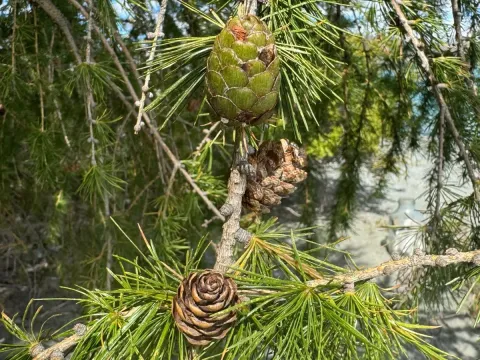
Larch
Larix
Propagation of Larch (Larix) is primarily conducted through seeds, which require a cold stratification process to overcome dormancy and ensure uniform germination in the nursery.
What the section contains
 Dunkeld larch
Larix marschlinsii
Dunkeld larch
Larix marschlinsii
 Griffith's Larch
Larix griffithii
Griffith's Larch
Larix griffithii
 Hybrid larch
Larix hybrids
Larix eurokurilensis
Larix eurokurilensis
Hybrid larch
Larix hybrids
Larix eurokurilensis
Larix eurokurilensis
 Lubarsky Larch
Larix lubarskii
Lubarsky Larch
Larix lubarskii
 Lyall's larch
Larix lyallii
Lyall's larch
Larix lyallii
 Masters larch
Larix mastersiana
Masters larch
Larix mastersiana
 Potanin's larch
Larix potaninii
Potanin's larch
Larix potaninii
 Weeping larch
Larix pendula
Weeping larch
Larix pendula
Larch
The optimal sowing time is early spring, ensuring that the soil temperature has warmed sufficiently to encourage rapid root development in the young seedlings.
Seeds are placed at a shallow depth of 0.5 to 1 cm, as deeper sowing can hinder the emergence of the small, delicate cotyledons typical of the Larix genus.
Containerized seedlings are increasingly favored in modern silviculture, allowing for higher survival rates during transplanting and more efficient use of nursery space.
When outplanting in reforestation areas, it is crucial to protect the delicate root ball and ensure the site is clear of competing vegetation for at least the first two growing seasons.
Larch is a unique genus within the Pinaceae family because it is deciduous, losing its needles in the autumn after turning a distinct golden-yellow color.
As a highly light-demanding species, Larch performs best in open locations with full sun exposure, failing to thrive in shaded environments or dense forest understories.
The species prefers deep, well-drained, fertile soils but exhibits remarkable adaptability to various soil types, provided they are not excessively waterlogged or alkaline.
Larch is renowned for its exceptional cold tolerance, making it an essential component of boreal forest ecosystems and plantations in high-latitude regions.
While tolerant of urban conditions, they require adequate moisture during the growing season to prevent needle drop and stress caused by prolonged drought conditions.
Larch is widely valued for its rapid juvenile growth rate, which allows for shorter rotation cycles in commercial forestry compared to other slow-growing coniferous species.
Mature Larch stands are capable of producing high yields of high-density timber, which is prized for its strength, durability, and natural resistance to rot.
The timber is extensively used in external construction, such as cladding, decking, and maritime engineering, as the heartwood is rich in natural preservatives like resins.
Beyond traditional timber production, Larch is also managed for resin extraction and, in some cases, for the production of Larch turpentine used in niche chemical applications.
Effective management of stand density through thinning is essential to maximize timber quality and volume production throughout the tree's lifespan.
Canker diseases, particularly those caused by the fungus Lachnellula willkommii, represent a significant threat to Larch plantations, often causing deformity and wood decay.
Needle cast diseases, which cause premature needle shedding, can significantly reduce the photosynthetic capacity of the tree, leading to stunted growth if left unmanaged.
Insect pests like the Larch casebearer and Larch sawfly can cause extensive defoliation, particularly in young stands, requiring integrated pest management strategies.
Bark beetles and wood-boring insects often target trees that are already weakened by drought or mechanical damage, making tree vigor a key factor in resistance.
- Sanitary thinning to remove infected wood.
- Monitoring programs to detect early signs of infestation.
- Selection of resilient seed sources during reforestation.