
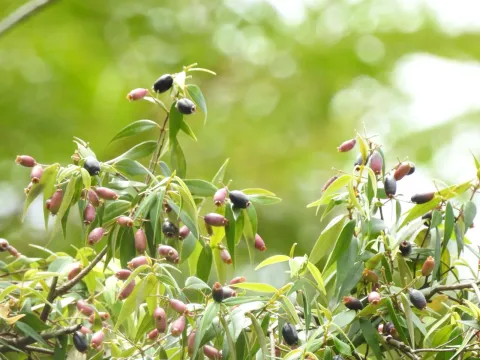
Myrcia
Myrcia
Myrcia is a significant genus of evergreen shrubs and small trees belonging to the Myrtaceae family. These plants are native to the tropical and subtropical regions of the Americas, thriving predominantly in South America, where they are integral components of diverse forest ecosystems.
What the section contains
 Myrcia chytraculia
Myrcia eximia
Myrcia eximia
Myrcia lineata
Myrcia lineata
Myrcia chytraculia
Myrcia chytraculia
Myrcia eximia
Myrcia eximia
Myrcia lineata
Myrcia lineata
 Myrcia loranthifolia
Myrcia neolucida
Myrcia neolucida
Myrcia loranthifolia
Myrcia loranthifolia
Myrcia neolucida
Myrcia neolucida
 Myrcia neosuaveolens
Myrcia neosuaveolens
Myrcia neosuaveolens
 Myrcia palustris
Myrcia popayanensis
Myrcia popayanensis
Myrcia palustris
Myrcia palustris
Myrcia popayanensis
Myrcia popayanensis
 Myrcia spectabilis
Myrcia spectabilis
Myrcia spectabilis
 Myrcia splendens
Myrcia splendens
Myrcia splendens
 Myrcia stenocarpa
Myrcia stenocarpa
Myrcia stenocarpa
 Myrcia tomentosa
Myrcia tomentosa
Myrcia tomentosa
 Myrcia xylopioides
Myrcia xylopioides
Myrcia xylopioides
 Myrcia zuzygium
Myrcia zuzygium
Myrcia zuzygium
Myrcia
The culture requires a consistent tropical climate to flourish, as it is highly sensitive to cold weather and frosts. Optimal growth occurs in areas where temperatures remain stable throughout the year, ensuring the plant receives adequate thermal energy for development.
When selecting a site for cultivation, it is essential to prioritize soils that are well-drained and nutrient-rich. Myrcia cannot tolerate waterlogging, which quickly leads to root rot; therefore, providing effective drainage is a fundamental requirement for successful orchard establishment.
Botanically, the plant is characterized by its coriaceous (leathery) leaves which are rich in essential oils. This provides a natural defense mechanism against various pests and imparts a distinct fragrance that is a hallmark of many species within the Myrtaceae family.
In terms of economic value, Myrcia is cultivated for its edible fruits which are harvested for local consumption and food processing. Additionally, many species are utilized in landscaping due to their attractive evergreen foliage and potential for forming dense, manageable hedges in suitable climates.
The health of Myrcia is frequently challenged by fungal pathogens that thrive in high-humidity environments. Leaf spot diseases and anthracnose are among the most common ailments, which can lead to significant defoliation if left unmanaged in dense planting schemes.
Pests such as scale insects and mealybugs represent a persistent threat, as they colonize tender stems and the undersides of leaves. These sap-sucking insects drain the plant's resources, causing stunted growth and increasing susceptibility to secondary infections.
Effective management involves maintaining proper airflow throughout the canopy through judicious pruning. By reducing the density of branches, the microclimate within the tree becomes less favorable for fungal spore germination and the development of insect colonies.
Integrated pest management (IPM) strategies are highly recommended for commercial Myrcia growers. This approach minimizes reliance on chemical inputs by prioritizing biological controls and strictly monitoring the health status of individual trees to catch infestations early.
Adequate nutrition, specifically balanced nitrogen and micronutrient applications, is crucial for maintaining a robust plant that can naturally resist stress and infestations. A healthy tree is inherently more resilient to the typical pests associated with the Myrtaceae family.