
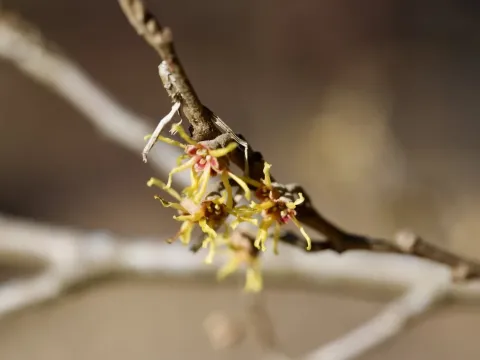
Ozark witch-hazel
Hamamelis vernalis
Hamamelis vernalis, commonly known as Ozark witch-hazel, belongs to the Hamamelidaceae family. It is a deciduous shrub native to the Ozark Plateau region in the United States, typically found inhabiting rocky stream banks and damp wooded areas.
What the section contains
Ozark witch-hazel
This species is highly valued for its early flowering period, often beginning in late winter. The flowers consist of four ribbon-like petals that remain resilient to freezing temperatures, making it a prized specimen for winter-interest gardens.
For successful cultivation, Ozark witch-hazel requires well-drained, acidic to neutral soils enriched with organic matter. While it tolerates a variety of soil types, it performs best in deep, moist, yet non-waterlogged substrates that mimic its natural riverbank habitat.
The shrub thrives in full sun to partial shade. In warmer regions, light afternoon shade is recommended to protect the foliage from heat stress, whereas in northern regions, full sun ensures optimal flowering density and brighter fall leaf color.
Maintenance is relatively straightforward: deep watering during dry spells and annual mulching are essential practices. Pruning should be kept to a minimum, ideally performed immediately after flowering to shape the plant and remove any crossing or dead branches.
Ozark witch-hazel is remarkably resistant to serious diseases. However, in poorly ventilated or excessively humid conditions, fungal leaf spots may occasionally occur, which generally do not compromise the overall health of the shrub.
Pests are rarely a major issue, though aphids or scale insects may occasionally infest new growth. Monitoring for such infestations during the spring flush is advisable, especially in specimens grown in container environments.
Leaf gall-producing insects can sometimes cause cosmetic damage to the foliage. While these galls are unsightly, they seldom cause permanent harm to the plant, and chemical treatment is typically unnecessary.
To prevent potential issues, it is crucial to ensure proper air circulation around the shrub by not overcrowding it with other plant species. Maintaining plant vigor through balanced fertilization and correct watering is the best defense against pests.
Overall, Hamamelis vernalis is an excellent candidate for low-maintenance landscaping, provided its basic moisture and soil requirements are met at the time of initial planting and establishment.