
Rhodoleia
Rhodoleia
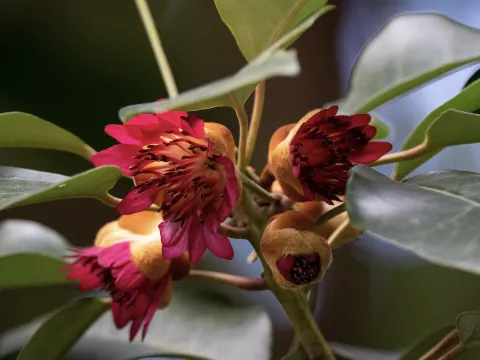
Rhodoleia is a genus of evergreen trees and shrubs belonging to the Hamamelidaceae family. The name derives from the Greek words for 'rose' and 'smooth', referring to the striking, rose-like floral bracts that make these plants a focal point in any botanical collection or ornamental garden.
What the section contains


Rhodoleia
Originating from the mountainous tropical and subtropical regions of Southeast Asia, including China and Vietnam, Rhodoleia thrives in humid environments. Its natural habitat is characterized by moderate temperatures and consistent rainfall, which allows the plants to maintain lush foliage throughout the year.
Botanically, the plant is distinguished by its leathery, glossy, alternate leaves and distinctive inflorescences that mimic the appearance of flowers. Rhodoleia requires careful positioning to protect its sensitive foliage from scorching direct sunlight, favoring filtered light instead.
Optimal growth depends on well-draining, acidic to neutral soil rich in organic matter. Proper irrigation is a fundamental aspect of its maintenance, requiring enough water to keep the soil consistently moist but never waterlogged, which is essential for healthy root development and overall plant vitality.
The primary use of Rhodoleia is landscape ornamentation. Due to its evergreen nature and attractive habit, it is widely utilized for privacy screening, ornamental specimen planting, and as a structural element in tropical and subtropical botanical garden designs.
The most common health issues for Rhodoleia involve root rot, typically caused by over-irrigation or inadequate soil drainage. Such conditions create an environment conducive to fungal pathogens, which can rapidly compromise the integrity of the root system if not addressed early.
Pests such as scale insects and mealybugs often affect the foliage and stems. By feeding on the plant sap, these insects can cause stunted growth, leaf yellowing, and general weakening of the shrub, requiring integrated pest management strategies to control their populations.
Spider mites represent a recurring threat, particularly during dry seasons or in indoor cultivation settings where humidity levels might drop. Maintaining optimal humidity and applying appropriate miticides are standard practices for mitigating mite infestations on Rhodoleia.
Fungal leaf spots can occur when air circulation is poor, particularly in dense plantings. Ensuring enough space between plants and removing dead or diseased foliage are critical preventive measures that help reduce the incidence of leaf-related diseases in the garden.
Successful management of Rhodoleia health relies on proactive monitoring and creating an environment that closely mimics its native ecological niche. By focusing on proper soil structure and vigilant care, growers can minimize threats and maximize the ornamental longevity of these plants.