
Rhodoleia
Rhodoleia Champ. ex Hook.
Description
Growing requirements
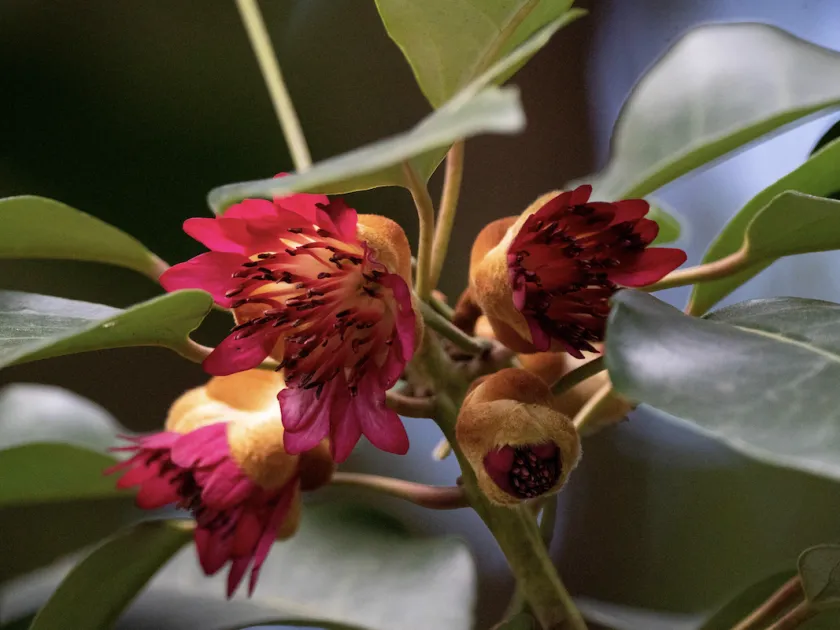
Rhodoleia is a genus of evergreen trees and shrubs belonging to the Hamamelidaceae family. Native to the mountainous regions of Southern China and Southeast Asia, these plants are renowned for their striking, rose-like flowers that appear in clusters at the ends of branches.
The culture thrives in humid, subtropical climates where temperatures remain consistently mild throughout the year. It is not cold-hardy, meaning that successful cultivation is largely confined to protected gardens or areas without risk of severe frost, as even minor freezing can damage foliage.
Regarding soil requirements, Rhodoleia necessitates well-draining, acidic to neutral, organic-rich soil. It is highly sensitive to waterlogged conditions, which can lead to root rot. Consequently, sites should be carefully selected, and soil amendments should be added to improve drainage in heavier clay-based landscapes.
Agricultural and maintenance practices for Rhodoleia involve providing adequate shade, especially during the peak of summer to prevent leaf scorching. Consistent irrigation is required to maintain soil moisture, particularly during the establishment phase, as the plant does not tolerate prolonged drought stress.
In terms of economic and horticultural use, Rhodoleia is primarily utilized for ornamental purposes. It is a prized specimen in landscaping, often used in botanical gardens and upscale residential properties for its vibrant floral display, which provides significant aesthetic value during the flowering season.